RAM and Ford evaporator leaks can hide deep inside the dashboard, making recharge attempts temporary when the core is losing refrigerant. This guide explains how Chandler heat, dust, odor clues, electronic leak detection, refrigerant recovery, and dash disassembly help confirm evaporator failure before internal HVAC components are replaced correctly and safely.
Aluminum evaporator cores in heavy-duty diesel trucks can fail from corrosion, vibration, thermal cycling, and moisture trapped inside the HVAC case. Because the core is buried inside the dash, UV dye may not be visible and a quick recharge can hide the real issue. Before any internal HVAC work begins, we confirm the leak and follow the correct safety steps around the SRS system, steering column area, electrical connectors, dash structure, and HVAC case so the dash pull protects the vehicle while the failed component is replaced correctly.
The Sweet Cabin Odor That Can Point to an Evaporator Leak
When a truck comes in from Loop 202 traffic with weak cooling and a sweet chemical odor through the vents, the evaporator core becomes one of the first areas we consider. That odor can come from refrigerant oil residue moving through the HVAC case with the air stream.
UV dye can help with some A/C leaks, but it is not always reliable for a buried evaporator core. These cores sit inside a reinforced HVAC case, so dye may not be visible unless the leak is large enough to carry oil to an accessible area.
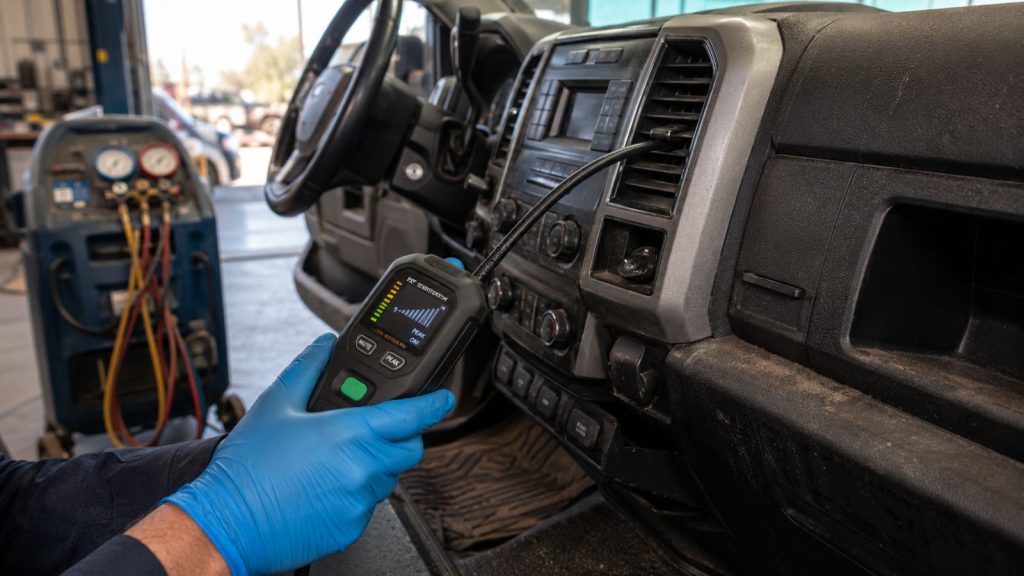
We use electronic refrigerant leak detection and system data to confirm whether the core is leaking before the dashboard is removed.
- Pressure and Sensor Data: We monitor pressure transducer readings and compressor behavior to see whether the system is losing charge or being limited by control logic.
- Evaporator Case Leak Check: We place the detector probe near the center vents or condensate drain tube to look for refrigerant traces coming from inside the HVAC case.
- Refrigerant Mass Behavior: We compare recovery data, pressure response, and expansion valve behavior to understand whether the system has been losing refrigerant over time.
These checks help confirm whether the leak is likely inside the dash before a labor-intensive evaporator replacement begins.
The Dash Pull Requires Precision Around Heat-Aged Arizona Plastic
A labor guide may list evaporator replacement as an eight-hour job, but real-world conditions can change how carefully the dash needs to come apart. In Arizona heat, plastic clips, trim panels, and mounting tabs on RAM and Ford trucks can become brittle from years of sun exposure and thermal cycling.
Replacing an internal HVAC component is not just a matter of unbolting parts. The dash assembly, glovebox area, steering column-related components, wiring connectors, and HVAC case must be handled in the correct sequence. We also recover and measure the refrigerant charge before the HVAC case is opened because heavy-duty diesel A/C systems depend on the correct refrigerant weight for proper pressure behavior, vent temperature, and expansion valve performance.
How Chandler Dust and Heat Stress Aluminum Evaporator Cores
Aluminum is durable, but it is not immune to the conditions inside a desert HVAC case. The failure pattern usually comes from contamination, heat cycling, and trapped moisture working together over time:
- The Caliche Trap: Fine desert dust can enter through the fresh air intake and settle on damp evaporator fins. When that buildup holds moisture against the aluminum surface, it may contribute to small corrosion points over time.
- Thermal Fatigue: Chandler temperature swings can force aluminum, seals, plastic HVAC case components, and joints to expand and contract at different rates. Repeated heat cycling can stress weak areas and make existing leaks easier to expose.
- Moisture Retention: During humid or monsoon conditions, moisture inside the HVAC case can keep dust and debris damp longer. That moisture may sit against the evaporator surface and accelerate corrosion in areas already weakened by age, contamination, or heat.
Why Topping Off a Leaking Evaporator Does Not Solve the Cause
We see this pattern often during Chandler A/C season: the vents start warming up in traffic, the system gets topped off, and the cooling improves only temporarily. When an evaporator core is leaking, the system may lose refrigerant and oil over time, so repeated recharges do not address the source of the problem.
Running the A/C with a low charge or reduced oil circulation can increase compressor stress and may spread contamination if the compressor begins to wear internally. The better approach is to confirm the leak, recover and measure the refrigerant, replace the failed evaporator core when needed, and recharge the system to the correct specification.
Copperhead Diesel Performance provides evaporator leak diagnostics, refrigerant recovery, dash disassembly, internal HVAC component replacement, and heavy-duty diesel A/C repair at 145 E Highland St, Chandler, AZ 85225.
Frequently Asked Questions
Can I drive my diesel truck with a leaking evaporator?
No, you should not continue using the A/C system without having it inspected. The truck may still drive normally, but a leaking evaporator can release refrigerant and oil, which may reduce cooling and increase compressor stress if the system keeps operating while low.
Is evaporator repair a labor-intensive process in Chandler?
Yes. In heavy-duty RAM and Ford trucks, the evaporator is located inside the HVAC case behind the dashboard. Replacing it often requires extensive dash disassembly, careful handling of SRS-related components, steering column-area parts, electrical connectors, and heat-aged interior plastics.
Will a stop leak product fix my A/C leak?
Stop leak products are not usually recommended for modern A/C systems. Chemical sealants can harden in small passages, affect expansion valves or service equipment, and make future repairs more complicated. A proper leak diagnosis is the safer approach.
Can an evaporator leak be confirmed without pulling the dash?
Yes, in many cases. Electronic refrigerant leak detectors can check the center vents or HVAC drain tube for traces of refrigerant coming from the evaporator case. This helps confirm the core is leaking before the dashboard is removed.