Hybrid electric A/C compressors do more than cool the cabin. In many hybrids, they also help control high-voltage battery temperature. When Chandler heat exposes compressor, inverter, oil contamination, or isolation faults, the A/C system may shut down or limit operation. This guide explains why proper high-voltage diagnostics matter.
When we diagnose a hybrid A/C concern, we are not checking a simple belt-driven compressor anymore. Many hybrid systems use a high-voltage, electronically controlled compressor, so we do not call the part failed based on vent temperature alone. We compare compressor commands, inverter data, insulation readings, oil compatibility, and battery cooling demand to see what the system is actually doing.
Why Hybrid A/C Failure Can Affect More Than Cabin Cooling
In a modern hybrid, the A/C compressor may support both cabin comfort and battery temperature control. When the vehicle is sitting in Chandler traffic, the high-voltage battery can absorb heat from the road surface, cabin load, power electronics, and repeated stop-and-go driving.
If the battery cooling system needs help, the vehicle may command the electric compressor to increase output. If the compressor cannot respond because of an inverter fault, internal electrical issue, communication problem, or protection event, the vents may go warm and the vehicle may store hybrid or A/C-related warnings.
That is why hybrid A/C failure can feel different from a conventional A/C problem. The system is not only deciding whether the cabin feels comfortable. It may also be protecting the high-voltage battery and related electronics from excessive heat.
How a High-Voltage Electric Compressor Supports Battery Cooling
A belt-driven compressor depends on engine operation, but a hybrid electric compressor can run based on electrical commands from the vehicle. This allows the system to cool the cabin and help manage battery temperature even when the engine is off.
When traffic slows on Loop 202 or the vehicle sits through long idle periods, the compressor may be asked to keep cooling without much natural airflow. If the compressor does not reach the requested speed, or the inverter cannot support the load, cabin cooling and battery cooling can both be affected.
A proper diagnosis looks at more than vent temperature. We check data such as compressor command, compressor speed feedback, battery temperature, A/C pressure, inverter status, and stored trouble codes. Those values help show whether the compressor is failing mechanically, electrically, or being limited by system protection logic.
Why Oil Type Matters in High-Voltage A/C Systems
Electric compressors require the correct oil because the compressor motor and high-voltage windings are inside the sealed A/C assembly. Many hybrid and electric A/C systems use specialized non-conductive oil, often POE-based, to help maintain electrical isolation inside the compressor.
Using the wrong oil can create serious problems. Standard PAG oil used in many conventional A/C systems may not provide the insulation properties required by a high-voltage electric compressor. If contamination lowers insulation resistance, the vehicle may detect an isolation fault and limit or disable high-voltage operation.
The safest approach is to follow the manufacturer’s oil specification for that exact vehicle. Hybrid A/C service should not involve mixing oils, guessing oil type, or using contaminated recovery and service equipment. Even a small amount of the wrong lubricant can create confusing diagnostic problems.
How Isolation Faults Can Disable Hybrid Cooling
A high-voltage isolation fault means the vehicle has detected a possible loss of separation between the high-voltage circuit and the rest of the vehicle. In some cases, the A/C compressor can be part of that fault path because it contains high-voltage windings, internal electronics, refrigerant, and oil inside one assembly.
A code such as P0AA6 may point toward a high-voltage system isolation concern, but it does not automatically prove the compressor is the failed part. The compressor, battery pack, inverter, wiring, connectors, coolant heaters, or other high-voltage components may need to be checked depending on the vehicle.
High-voltage protection logic is designed to prevent unsafe operation. If the vehicle detects an isolation problem, it may limit hybrid operation, shut down compressor function, or store fault codes that need proper testing before parts are replaced.
Testing Compressor Insulation Before Replacing Parts
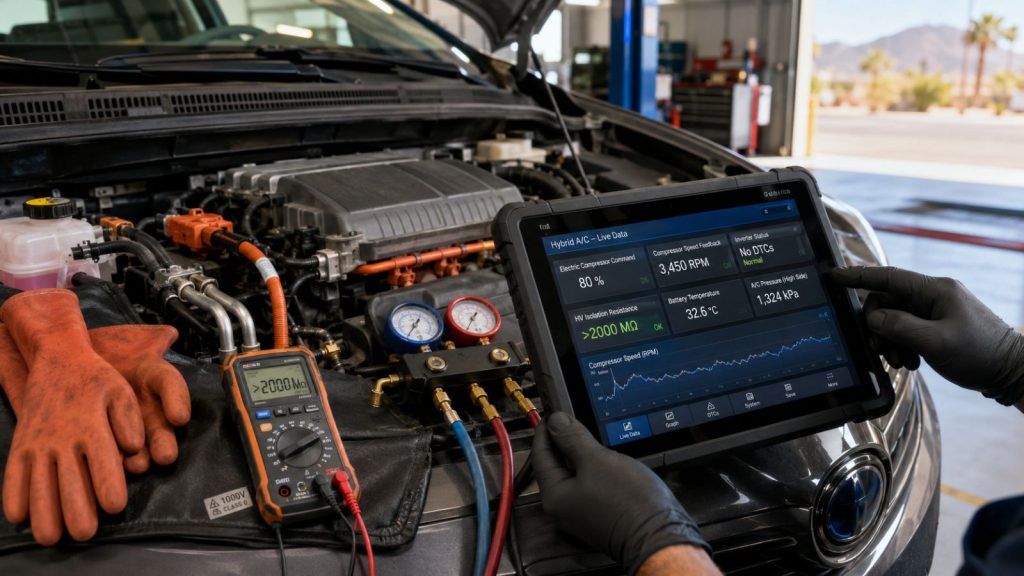
A hybrid A/C diagnosis should confirm whether the compressor is being commanded, whether it is responding, and whether the high-voltage side is safe to test. That can include scan tool data, A/C pressure readings, connector inspections, service information checks, and insulation resistance testing when required.
Insulation testing is not the same as a basic continuity check. The goal is to measure whether the compressor windings and high-voltage components remain properly isolated from the compressor case and vehicle ground. If resistance falls below the required specification, the vehicle may identify the compressor circuit as unsafe.
Heat can make borderline faults easier to find. A compressor that passes when cold may behave differently after the vehicle has been driven in Chandler traffic or heat-soaked in a parking lot. That is why we look at operating conditions, stored codes, live data, and manufacturer test procedures together instead of guessing.
Hybrid A/C Diagnostics in Chandler Heat
When a hybrid A/C system fails in desert traffic, the answer is not always a low refrigerant charge. The issue may come from compressor inverter failure, reduced insulation resistance, incorrect oil contamination, battery cooling demand, pressure sensor data, or high-voltage safety logic.
A careful diagnostic process helps prevent unnecessary compressor replacement and avoids unsafe service practices. The system should be checked with the correct equipment, correct oil information, and proper high-voltage safety procedure before the A/C circuit is opened or charged.
For hybrid A/C concerns in Chandler traffic, Copperhead Diesel Performance at 145 E Highland St, Chandler, AZ 85225 can test compressor command, pressure behavior, fault data, and high-voltage safety indicators so the repair is based on evidence instead of guesswork.
Frequently Asked Questions
Can I use regular A/C oil in my hybrid?
No. A hybrid electric compressor should use the exact oil specified by the manufacturer. Many high-voltage electric compressors require specialized non-conductive oil, often POE-based, because the compressor motor and electrical windings must remain isolated from the vehicle chassis. Using the wrong oil can reduce insulation resistance and trigger high-voltage faults.
Does the hybrid system prioritize cooling the battery over the cabin?
Yes, it can. In many hybrids, the A/C system may support battery cooling as well as cabin cooling. If battery temperature rises, the vehicle may prioritize battery protection, reduce cabin cooling, or command additional compressor operation depending on system design.
Does a P0AA6 code mean the A/C compressor has failed?
Not automatically. P0AA6 is commonly associated with a high-voltage isolation fault, but the compressor is only one possible cause. The fault path may involve the compressor, battery pack, inverter, wiring, connectors, or another high-voltage component. Proper testing is needed before replacing parts.
Is it safe to repair a high-voltage electric compressor myself?
No. High-voltage A/C systems should not be serviced without proper training, equipment, and disable procedures. These systems can create serious shock risk if handled incorrectly. Professional diagnosis should include approved safety steps before any high-voltage A/C component is tested or disconnected.