Airport shuttle vans spend long periods idling in extreme heat with frequent door openings, heavy passenger load, and low vehicle speed. These conditions can stress the A/C compressor, condenser airflow, refrigerant charge, oil circulation, and belt system. This guide explains how approved high-idle strategy and fleet diagnostics help protect A/C reliability.
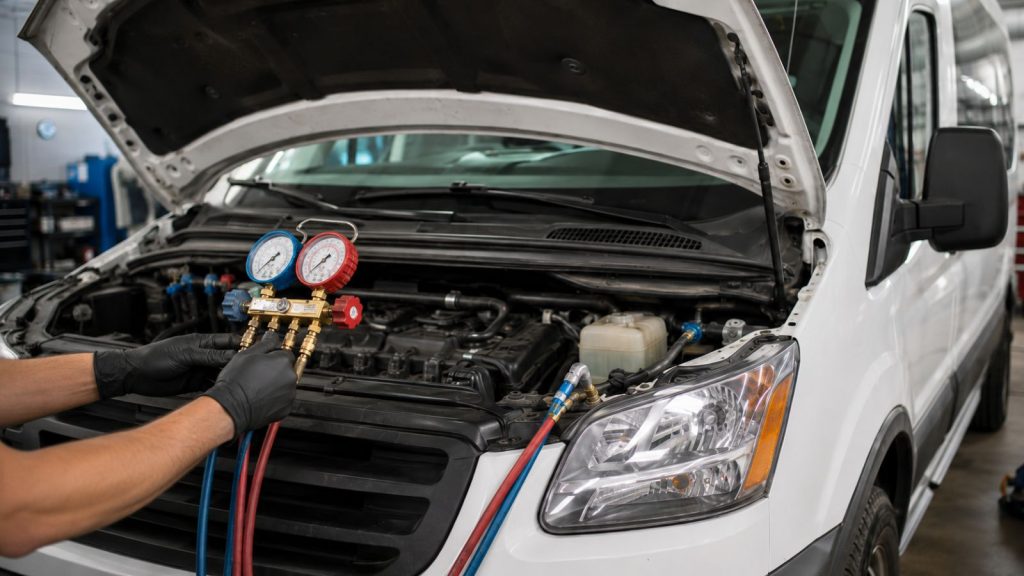
Airport shuttle A/C systems work harder than normal commuter vehicles because they idle for long periods, handle frequent passenger loading, and run the A/C almost nonstop between Chandler and Phoenix Sky Harbor. When we inspect shuttle vans with repeat A/C failures, we check refrigerant charge, oil balance, condenser airflow, fan operation, belt condition, idle strategy, pressure behavior, and contamination signs to understand why the compressor is being stressed before another part is installed.
Why Airport Shuttle A/C Systems Work Hard at Idle
Airport shuttles spend a lot of time barely moving. During long idle periods, there is little natural airflow through the grille, so the A/C system depends heavily on the fan and condenser condition to release heat. At the same time, passengers, luggage, open doors, and hot pavement keep adding heat to the cabin.
That makes the compressor work harder to maintain vent temperature while the condenser has less airflow to remove heat. If the condenser is dirty, the fan is weak, or the refrigerant charge is incorrect, high-side pressure may rise faster during idle than it would during steady road speed.
This is why a shuttle may cool well while driving but struggle during airport wait times. The problem may not be one failed part. It may be a combination of long idle operation, high heat load, reduced airflow, and aging A/C components.
How Refrigerant and Oil Circulation Protect the Compressor
An automotive A/C compressor relies on refrigerant flow to help move oil through the system. The oil does not sit in a separate engine-style oil pan. It travels with the refrigerant and helps lubricate internal compressor components as the system operates.
During long idle periods, refrigerant flow and compressor speed may be lower than during normal driving. That does not automatically mean the compressor is being starved, but it can make oil circulation, airflow, and system pressure more important. If the system also has low refrigerant, incorrect oil amount, poor condenser airflow, or internal wear, compressor stress can increase.
A full refrigerant charge does not always prove the compressor is protected. Oil balance, contamination, pressure behavior, and airflow all matter. That is why repeated compressor replacement without checking the rest of the A/C loop can lead to repeat failures in fleet vehicles.
Why Low Vehicle Speed Raises Heat and Pressure
A shuttle van sitting near a terminal curb or airport pickup area has very little road-speed airflow. The fan must pull enough air through the condenser to release heat from the refrigerant. If airflow is weak, high-side pressure can climb and the compressor may operate under heavier load.
Heat also builds around the engine bay during extended stationary operation. The condenser is mounted at the front of the vehicle, but it is still affected by radiator heat, pavement heat, and repeated A/C demand. When the system cannot reject heat efficiently, the control logic may reduce compressor operation or cycle the system to protect components.
These pressure and heat patterns can shorten component life over time. The risk is higher when a shuttle spends many hours idling each week, especially during Phoenix summer service.
How High-Idle Strategy May Help Fleet A/C Performance
A high-idle strategy may help some shuttle vehicles during long stationary periods, but it should be OEM-approved or properly configured for the vehicle. Raising idle speed can increase compressor speed, improve fan output, and support better condenser airflow depending on the system design.
This does not mean every van should be modified or idled higher without review. High-idle settings should be evaluated with service information, fleet usage, engine operating conditions, emissions requirements, and live A/C pressure data. The goal is to improve cooling stability without creating new drivability or compliance issues.
For fleets, high idle is best treated as one part of a broader thermal management plan. It works alongside correct refrigerant charge, clean condenser fins, strong fan operation, proper oil amount, and belt inspection.
What Fleet A/C Diagnostics Should Check
Fleet A/C diagnostics should focus on why the system is failing under real airport operating conditions. A van may pass a quick vent temperature check in the bay but still struggle after long idle time in summer heat.
- Refrigerant Charge: The system should be recovered and charged by the specified weight when service is needed.
- Oil Balance: Incorrect oil amount, contamination, or repeated component replacement can affect compressor lubrication and heat transfer.
- Condenser Airflow: Dirty fins, weak fans, or blocked airflow can raise high-side pressure during idle.
- Fan Operation: Fan command, fan speed, and actual airflow should be checked when the A/C is under heat load.
- Belt Condition: Glazing, cracking, black dust, or tension problems can point to accessory drive stress.
- Pressure Behavior: High-side and low-side pressures should be evaluated during idle, elevated idle, and road-speed conditions when possible.
- Idle Strategy: Approved high-idle options should be checked only when they fit the vehicle and fleet usage.
These checks help determine whether the compressor failed from age, contamination, airflow restriction, oil imbalance, electrical control issues, or repeated heat stress.
Why Compressor Seizures Can Affect More Than the A/C
A compressor that begins to fail can place extra load on the belt drive. In some vehicles, a seized compressor can damage or throw the serpentine belt, which may affect other belt-driven accessories. The exact impact depends on the vehicle layout, because not every engine drives the water pump, alternator, or power steering the same way.
This is why belt inspection matters in shuttle fleet maintenance. A glazed belt, noisy pulley, failing tensioner, or compressor clutch concern should not be ignored. Those signs may appear before a complete A/C failure.
Catching resistance, noise, or pressure problems early can help prevent a cooling complaint from becoming a roadside reliability issue for a driver and passengers.
Airport Shuttle A/C Reliability in Chandler and Phoenix
Airport shuttle A/C reliability depends on matching the service process to the way the vehicle is actually used. Long idle hours, passenger loading, hot pavement, and repeated stop-and-go service are not the same as normal commuting. The system has to be tested with that duty cycle in mind.
If a shuttle van cools well during short drives but warms up during terminal wait times, the diagnosis should include airflow, pressure behavior, charge accuracy, oil balance, fan performance, and approved idle strategy. Replacing the compressor alone may not solve the cause if the system is still operating under poor airflow or heat-load conditions.
For airport shuttle A/C reliability concerns in Chandler and Phoenix service routes, Copperhead Diesel Performance at 145 E Highland St, Chandler, AZ 85225 can inspect refrigerant charge, condenser airflow, compressor load, belt condition, fan operation, and high-idle options before recommending repair or fleet adjustments.
Frequently Asked Questions
Can an A/C compressor seize even if the refrigerant level is full?
Yes, it can. A full refrigerant charge does not automatically mean the compressor has correct oil balance, clean refrigerant flow, proper condenser airflow, or healthy internal components. Compressor failures can come from contamination, oil problems, heat stress, airflow restriction, electrical control issues, or wear.
Will a high-idle setting make my shuttle use more fuel?
It may use more fuel because the engine is running at a higher idle speed. For fleet vehicles, the question is whether an approved high-idle strategy helps improve A/C stability, fan performance, and passenger comfort during long stationary periods. It should be evaluated against operating cost, vehicle requirements, and service data.
Can I tell if my compressor is starting to fail before it locks up?
Sometimes. Warning signs may include metallic noise, clutch chatter, belt dust, belt glazing, poor cooling at idle, repeated compressor cycling, or a noticeable engine load change when the A/C engages. These symptoms should be inspected before the compressor or belt system fails completely.
Does a snapped A/C belt shut down the whole engine?
It depends on the vehicle. Some engines use one serpentine belt for several accessories, while others use different belt layouts or electric accessories. A belt failure can still be serious because it may affect charging, cooling, steering assist, or other systems depending on the design.