Modern connected vehicle telematics streamline fleet logistics by allowing off-site technicians to remotely identify HVAC mass flow restrictions and cooling inefficiencies. Intercepting these data trends over the air facilitates pre-planned service interventions, ensuring heavy-duty vehicles remain fully operational through the peak thermal loads of a Chandler summer.
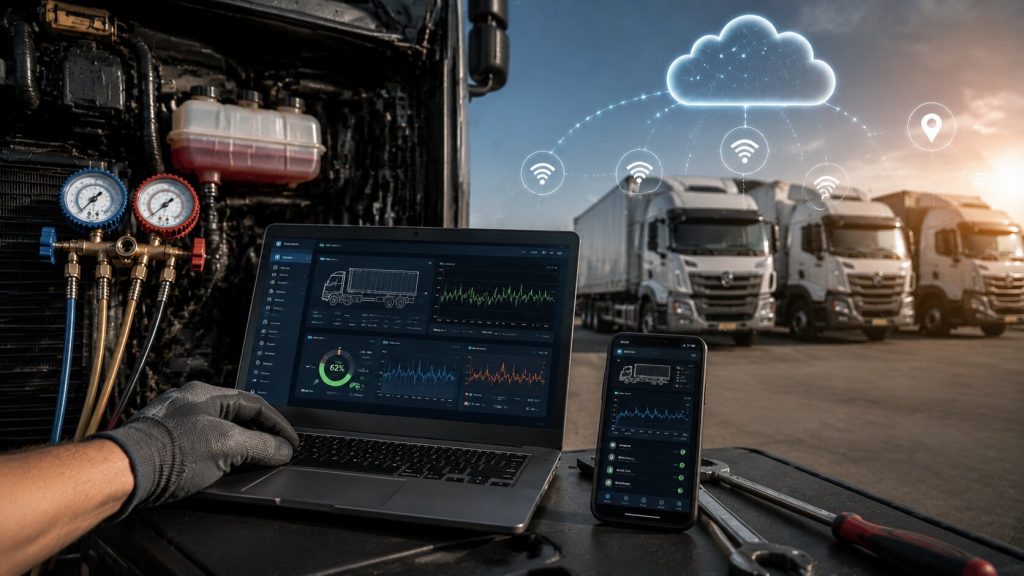
I monitor live telemetry from service trucks while they are on the road. Remote data reveals real-time HVAC cooling failures before they become critical. This connectivity transforms fleet management, allowing us to diagnose issues remotely. By analyzing technical parameters in the field, we eliminate diagnostic guesswork and ensure repairs are pre-planned, keeping vehicles operational and comfortable long before the truck even reaches our facility for service.
Reading the Data Stream During Remote Cab Pre-Cooling
When a heavy-duty diesel vehicle sits exposed in an unshaded blacktop parking lot in Chandler during July, internal cabin temperatures regularly hit a staggering 140°F. This massive thermal soak places an immense immediate load on the refrigeration loop the moment the vehicle is remotely started to cool the interior.
Predictive telematics treat remote pre-cooling as a stress test. A vehicle’s gateway module streams real-time data on evaporator temperature drops relative to engine and fan speeds. If the core fails to drop below 60F within ten minutes, cloud software identifies a performance deficit. This automated system enables fleet managers to schedule maintenance proactively, preventing mid-route cooling failures while the truck remains operational.
Diagnosing Low Refrigerant Mass Flow Before the Fleet Returns
Isolating a slow chemical leak over the air requires the tracking system to evaluate the complex thermodynamic relationship between internal system pressures and fluid velocity:
- TXV Modulation Anomalies: The cloud software tracks the operational opening angle of the Thermal Expansion Valve (TXV). A valve that remains stuck at maximum expansion signals a low system charge.
- Low Mass Flow Velocity: When system mass drops, the overall velocity of the moving gas slows down dramatically, which severely reduces the rate of heat extraction across the cooling fins.
- Low-Side Transducer Voltage Shift: The computer monitors the precise voltage drops across the low-pressure transducer, mapping structural balance drifts before an active dashboard fault code drops.
An oversized TXV opening with declining low-side voltage signals critical refrigerant loss. Insufficient mass flow starves compressors of oil, causing immediate friction and damage. Early remote detection enables proactive fluid adjustments, preventing permanent mechanical failure.
The Logistics of Pre Staged Fleet Interceptions vs Emergency Repairs
The primary operational advantage of utilizing remote telemetry tracking is the ability to execute high-velocity, pre-staged fleet interceptions. Instead of waiting for a total system failure to strand an asset on the side of the highway, fleet managers can route the compromised vehicle directly to our workshop on its return loop.
The table below outlines the massive cost and operational advantages of leveraging remote over-the-air diagnostic data over standard reactive breakdown repairs:
| Operational Management Parameter | Remote Connected Telematics Interception | Emergency Reactive System Breakdown |
| Shop Service Turnaround Time | Under 45 minutes; parts are pre-staged in the bay. | 2 to 4 days of unscheduled logistical asset downtime. |
| Component Replacement Scope | Limited to basic line seals or port valve needles. | Total system scrap including compressor and condenser. |
| On-Site Diagnostic Precision | Instant verification via pre-analyzed cloud logs. | Extensive manual teardown and multi-hour leak testing. |
| Logistical Shipping Impact | Fleet routes are re-allocated with zero missed slots. | Catastrophic mid-route failure with immediate cargo risk. |
| Total Financial Loss Risk | Low, predictable preventative maintenance spend. | High emergency towing fees and emergency labor rates. |
We use these data logs to optimize our workflow. By identifying technical issues before a vehicle arrives, our parts department can pre-stage necessary components. This ensures your commercial asset stays on the road earning revenue instead of sitting idle in the shop.
The Copperhead Precision Over the Air Validation Framework
When our workshop intercepts a telematics-flagged commercial vehicle, our master technicians run an exact, multi-stage physical confirmation sequence inside our specialized service bays:
- Data Packet Cross Verification: We connect our advanced shop diagnostics terminals directly to the vehicle’s data bus to confirm that the streamed cloud telemetry matches local module memory logs.
- Physical Mass Weight Auditing: We isolate and extract the remaining refrigerant charge using automated recovery stations to verify the exact mass deficit against factory specifications.
- Digital Manifold Evaluations: We connect precision digital manifolds to cross-reference the remote sensor pressure transducer voltage trends against physical pressure readouts under full load.
This rigorous validation loop guarantees that every remote data alert is backed by physical operational evidence, allowing us to execute fast, surgical repairs that keep your commercial assets working reliably through the most intense summer heatwaves.
The Ultimate Pre Summer Shield for Your Truck
Stop operating blindly. High-load routes like Loop 202 near Alma School Rd pose financial risks for unmonitored AC systems, where low refrigerant flow can turn simple leaks into costly compressor failures. Prevent breakdowns and towing fees by visiting Copperhead Diesel Performance at 145 E Highland St. Chandler, AZ 85225. We use connected vehicle data and real-time evaporator profiling to pre-stage repairs, ensuring your fleet stays reliable all summer.
Are your delivery trucks operating at peak mechanical efficiency, or is a hidden over-the-air data log currently flagging an escalating mass flow restriction? Let’s run a complete cloud diagnostic audit on your fleet today and intercept the problem before the summer heat wave hits.
Frequently Asked Questions
Can over-the-air telematics data detect a slow air conditioning leak before a driver notices warm air?
Yes. Algorithms analyze real-time evaporator temperature sensors and TXV modulation trends during remote pre-cooling cycles. The software flags a refrigerant mass flow deficit when the cooling curve flattens, identifying structural integrity issues weeks before the interior air drops in performance.
Do I need to install aftermarket hardware to track remote pre-cooling diagnostics?
No. Most modern connected vehicle platforms utilize built-in factory telematics modems to broadcast climate loop parameters directly to a secured cloud system. Our workshop syncs with these existing data architectures to read active sensor voltage arrays without structural modifications.
Why does a low refrigerant mass flow condition damage a healthy compressor?
It is because the chemical refrigerant acts as the primary transport medium for the system’s synthetic lubricating oil. When fluid mass drops too low, the oil loses its necessary velocity and traps inside the condenser, leaving the main compressor pistons to run dry and seize.
Will a standard handheld code scanner display these remote predictive telematics alerts?
No. Basic consumer code readers only display generic diagnostic trouble codes after a component has crossed a terminal failure threshold. Predictive mass flow alerts reside inside the advanced continuous data stream logs, which require specialized cloud management software to track over time.
How long does it take for your shop to execute a pre-staged component interception?
Remote vehicle data analysis allows us to pre-stage parts and tools before you arrive. This proactive method enables our team to finish mass balancing and seal corrections in under forty-five minutes of off-peak time. This efficiency minimizes downtime, keeping your fleet operational with precise and reliable maintenance.