DIY AC recharge cans may temporarily restore cooling, but they do not repair the leak that caused refrigerant loss. Some products containing stop-leak or other additives can complicate diagnosis, affect refrigerant recovery procedures, and contribute to restrictions in sensitive AC components. In Chandler’s extreme summer heat, these hidden problems can become more noticeable as the system works harder. Proper leak testing, refrigerant identification, and measured repair prevent unnecessary component replacement.
At 145 E Highland St, a refrigerant identifier flags a problem before a diesel truck’s AC system is connected to recovery equipment. The owner had added a DIY aerosol sealant after the vents began blowing warm, turning a simple leak diagnosis into a system-condition investigation. This quick fix introduced an unknown additive into a system designed to operate with specific refrigerant and oil requirements. In the intense June heat of the Sonoran Desert, that choice turned a simple leak repair into a much more involved system evaluation.
How Stop-Leak Products Can Behave Inside Modern AC Systems
Stop-leak products are designed to circulate with refrigerant and oil, but formulas vary and the exact material inside a truck’s AC system may be unknown after installation. Under certain conditions, additives can contribute to residue or deposits that affect small passages and make diagnosis more difficult. The main concern is not that every product automatically destroys a system, but that contamination can change the repair process and require additional testing.
Potential areas affected include:
- Thermal expansion valves (TXV): Residue or debris can interfere with precise refrigerant metering.
- Orifice tubes: Small passages can become restricted if contamination is present.
- Condenser passages: Parallel-flow designs can be difficult to verify clean after contamination.
- Service ports and hoses: Additives may leave residue that complicates future service.
- Recovery equipment: Unknown refrigerant additives can require separate handling procedures before connecting standard recovery machines.
Why Modern Truck AC Expansion Valves and Compressors Are Vulnerable
The thermal expansion valve (TXV) is one of the most sensitive components in a modern AC system because it controls refrigerant flow through a very small internal passage. The valve regulates liquid refrigerant entering the evaporator through a precision-controlled needle and extremely small internal passages designed for accurate refrigerant metering.
If refrigerant carries residue, debris, or incompatible additives into this restricted area, the valve can become contaminated and refrigerant flow may be reduced. A restriction can create abnormal pressure behavior, reduce evaporator performance, and increase stress on the compressor. Because the compressor depends on proper refrigerant and oil circulation for cooling and lubrication, prolonged operation under restricted or incorrect system conditions can increase heat, friction, and internal wear.
One pattern we see is a truck that arrives after multiple recharge attempts because the owner assumes the system is simply low on refrigerant. Recovering and measuring the actual charge often changes the diagnosis. What looks like a refrigerant problem can sometimes be an airflow issue, a leak, an overcharge, or a component-control problem.
Why Professional Shops Test Refrigerant Before Recovery
The concern with DIY chemical additives extends beyond the vehicle itself. Before connecting a truck to recovery equipment, professional shops verify refrigerant condition to prevent unknown mixtures or additives from contaminating their machines and recovered refrigerant supply. At Copperhead Diesel Performance, we use refrigerant identification before recovery when contamination is suspected so we can choose the correct handling procedure.
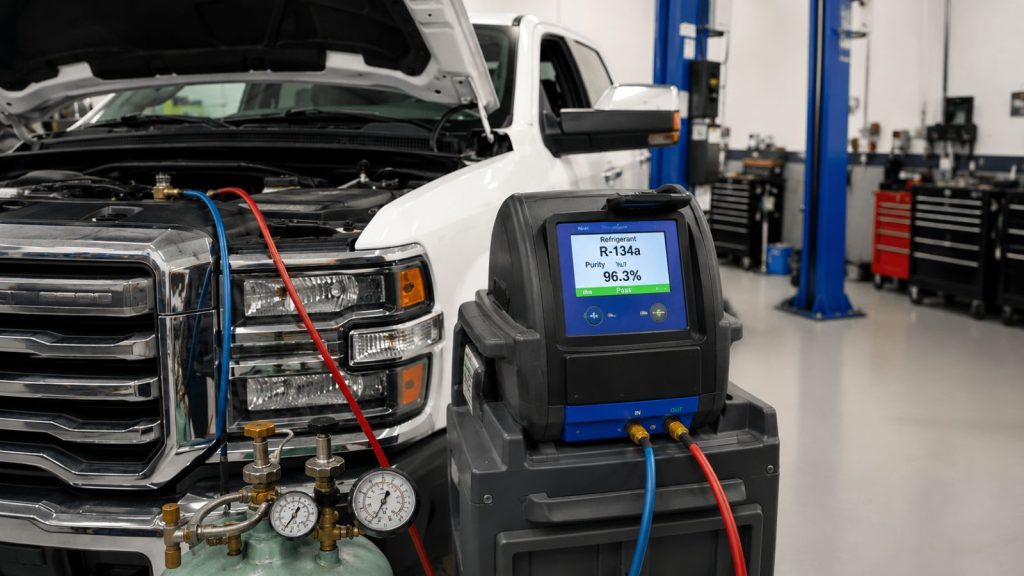
Potential risks of contaminated refrigerant include:
- Recovery equipment contamination: Unknown additives can affect hoses, filters, valves, separators, and other internal components, increasing maintenance requirements.
- Refrigerant supply contamination: Refrigerant containing unexpected additives should not be mixed with the shop’s normal recovered supply.
- Additional recovery procedures: If the system fails identification testing, it may require separate recovery equipment, dedicated storage, and additional handling before repair.
A failed refrigerant identification test does not automatically determine the exact additive inside the system, but it does indicate that the refrigerant condition needs further evaluation before standard recovery equipment is connected.
Understanding the Real Cost Difference Between Recharge and Repair
When stop-leak or unknown additives are introduced into an AC system, the repair process may become more involved than simply replacing the original leaking component. Because refrigerant and oil circulate throughout the system, contamination can potentially affect multiple components and change the scope of diagnosis and repair.
The difference between a simple leak repair and a contaminated system depends on what was added, where residue is found, and whether affected components can be cleaned and verified.
| AC Component | Scope With Standard Leak Repair | When Sealant Contamination Is Suspected | Possible Impact |
| Refrigerant System | Recover refrigerant, repair leak, evacuate, and recharge | Refrigerant condition must be evaluated before standard recovery | Additional recovery handling may be required |
| Expansion Valve (TXV) | Replace only if testing confirms a fault | Inspect for residue, restriction, or abnormal operation | Additional diagnosis or replacement may be needed |
| Condenser Assembly | Reuse if clean and operating correctly | Parallel-flow passages may be difficult to verify clean | Replacement may be recommended if cleaning cannot be confirmed |
| AC Compressor Unit | Test operation and refrigerant/oil condition | Inspect for wear, debris, or lubrication concerns | Repair scope depends on confirmed compressor condition |
| Internal Hoses and Lines | Repair confirmed leak location | Inspect for residue or contamination concerns | Additional cleaning or replacement may be considered |
A recharge product does not automatically create a complete system failure, but it can change a straightforward leak repair into a more involved diagnostic process. The goal is not replacing every component—it is identifying what happened inside the system and repairing only what the evidence supports.
What To Do If Sealant Has Already Been Added
If a leak sealant has already been added to your truck’s AC system, a proper inspection can help determine the safest repair path. Avoid guessing at the cause of the problem and have the system evaluated with the right diagnostic equipment.
If your truck’s AC system is not cooling properly after a sealant product has been added, visit Copperhead Diesel Performance at 145 E Highland St, Chandler, AZ 85225 for a proper inspection. We use refrigerant identification, leak testing, and system diagnostics to understand the condition of the AC system before recommending repairs.
If your truck’s AC is not cooling properly after using a sealant product, schedule an inspection to understand your system’s condition and determine the right next step.
Frequently Asked Questions
Why are retail stop-leak cans legal if they can create AC problems?
Retail AC additives are available for consumer purchase, but availability does not mean they are appropriate for every vehicle or repair situation. Modern truck AC systems rely on precise refrigerant control, and some manufacturers and service procedures do not recommend adding unapproved chemicals because they may complicate diagnosis or future repairs.
Can I tell if a previous vehicle owner used a chemical sealant in the AC system?
Sometimes. A professional shop can evaluate refrigerant condition, inspect for residue, and review the product history if available. Possible clues may include unusual material near service ports, unexpected recovery results, or information from a previous owner or repair record.
Will a professional AC flush remove stop-leak from a condenser?
Not always. Modern parallel-flow condensers contain many small internal passages that can be difficult to clean and verify after contamination. If the shop cannot confirm that the component is clean and operating correctly, replacement may be considered.
Can stop-leak contamination require replacing AC components?
Sometimes. The repair depends on the type of product used, the condition of the refrigerant and oil, the affected components, and whether contaminated parts can be cleaned and verified.
What should I do if I already added AC leak sealant to my truck?
Do not add more refrigerant or additional additives. Keep the product label if possible and inform the repair facility before recovery equipment is connected so the system can be identified, handled correctly, and diagnosed based on actual conditions.