AI-powered telematics and predictive maintenance systems analyze real-time compressor duty cycles and pressure transducer trends to isolate automotive air conditioning deficits. This technology enables scheduled workshop interventions before catastrophic mechanical breakdowns occur during July’s extreme triple-digit desert heatwaves across Chandler. By relying on data rather than physical symptoms, fleet managers can transition away from reactive emergency responses and secure the reliability of their transport chassis.
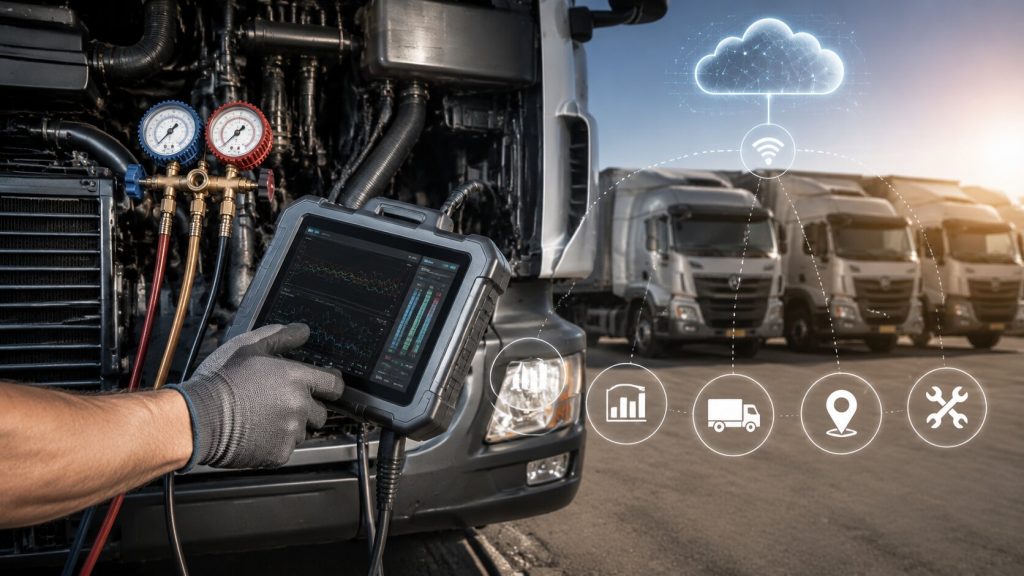
Inside the service bay, a live telemetry alert can flag a truck operating miles away. The driver may still feel cool air, but the cloud data shows an internal loop efficiency failure, catching hardware issues weeks early. Before the extreme 115-degree Chandler heat forces permanent mechanical friction, pulling this cloud-linked sensor data allows me to replace an unexpected highway breakdown with a highly optimized, pre-planned mechanical adjustment.
Tracking Compressor Duty Cycles in Real Time
Modern heavy-duty diesel trucks are equipped with variable-displacement compressors that rely on an internal electronic control valve to change piston stroke lengths. Instead of traditional on-and-off cycling, these advanced units utilize continuous Pulse-Width Modulation (PWM) signals directed straight from the central engine computer to maintain highly stable cabin temperatures.
Healthy systems run efficiently at a 40% to 50% PWM range. As microscopic leaks slowly reduce the total refrigerant mass, internal valves are forced to work harder, causing the central software to detect a baseline drift. When I monitor a live system where the duty cycle hits 85% without a corresponding drop in cabin temperatures, that algorithmic flag allows me to intervene and correct the fluid deficit before oil starvation permanently damages the cylinder walls.
How Algorithms Isolate Hidden Micro Leaks
Traditional pressure evaluation requires a technician to physically hook up standard mechanical analog gauges to service ports after a failure has already occurred. Predictive telematics completely flips this dynamic by monitoring live pressure transducer trends remotely while the truck is under full operational load. By comparing line pressures against ambient temperature data harvested from local weather streams, the system builds an automated proxy model of live system health.
The algorithmic software monitors the high-side pressure transducer continuously, checking for abnormal pressure climbs when the truck is idling stationary. Simultaneously, the platform tracks the voltage signature on the low-pressure switch, mapping subtle data drops that indicate fluid restrictions. When these data matrices begin to diverge, the software registers a hidden leak signature.
This digital warning catches systemic pressure imbalances while the vehicle is running deliveries, allowing for minor structural seal updates before consecutive high-load cycles lock up the entire compressor core.
Transitioning to Scheduled Fleet Adjustments
Chasing early digital warnings is a highly effective way to eliminate massive mid-summer route disruptions and logistical downtime. Drivers who ignore early data flags until their serpentine belt snaps on the highway trigger severe secondary component damage and emergency towing interventions. Managing a truck’s climate loop through preventative sensor tracking offers a massive operational advantage over waiting for an emergency breakdown.
The operational contrast between a predictive alert and a reactive breakdown is stark:
- Logistical Route Impact Scheduled shop drop-offs during off-peak delivery hours replace catastrophic vehicle stalls on the active freeway network.
- Secondary Hardware Damage Internal hardware components remain fully protected, preventing a seized pump pulley from shredding auxiliary drive belts.
- Required Shop Turnaround Precision fluid weight adjustments require minimal bay time compared to a multi-day teardown and comprehensive system flush.
Validating Cloud Alerts at the Diagnostic Center
When a predictive health alert targets a vehicle, a clinical validation process must be executed inside the diagnostic bay to confirm the digital findings. I connect advanced scan tools directly to the vehicle’s data network to cross-reference the streamed cloud data against live electrical waveforms. The entire fluid charge is then pulled using automated recovery stations to verify the exact mass balance against factory specifications.
Finally, specialized thermal cameras are used to trace the physical line layout, locating the exact source of micro-leaks flagged by the cloud system. This technical validation protocol dictates the preventative service standards executed at the 145 E Highland St, Chandler, AZ 85225 facility. Ensuring that every sensor-driven alert is backed by hard physical data allows for fast, surgical repairs that keep commercial equipment running cold all year long.
Frequently Asked Questions
Can predictive telematics detect an AC leak before the cabin air starts blowing warm?
Yes. Algorithms analyze real-time pressure transducer trends and control valve duty cycles to monitor efficiency. The system registers a refrigerant deficit when the compressor begins drawing more electrical energy to maintain performance, flagging the leak long before the driver ever feels a change in cabin temperature.
Do I need specialized factory hardware to utilize predictive AC maintenance data?
No. Most modern commercial telematics adapters pull live parameters directly from the standard J1939 or OBD-II vehicle network port. This data is streamed securely to a cloud terminal, allowing fleet operations managers and technicians to audit system health metrics remotely without proprietary hardware.
Why does a low refrigerant charge cause the compressor duty cycle to spike?
Variable-displacement pumps continuously adapt to system needs. When I extract a low fluid weight from a flagged truck, I know the internal swashplate had to lengthen its stroke to push the remaining gas harder to achieve the necessary cooling effect, which forces the control algorithm to run continuously at peak capacity.
Will an automated telematics system trigger a dashboard warning light for a slow leak?
No. Factory dashboard lights typically only activate when a critical safety sensor threshold is breached or a component fails entirely. Predictive AC alerts reside quietly inside the vehicle control module memory logs, which require an advanced diagnostic terminal to read in their early stages.
How does checking live waveforms inside a shop confirm a remote telematics warning?
By connecting an advanced oscilloscope to the control valve circuit on the shop floor, I can monitor the actual electrical current moving through the solenoid in real-time. This physical check confirms whether the issue is a genuine mechanical breakdown or simply a faulty sensor communicating bad data to the cloud.