Cabin air filters and receiver-drier desiccant elements protect different parts of the A/C system. The cabin filter helps preserve airflow across the evaporator, while the desiccant element helps control moisture inside the sealed refrigerant loop. In Chandler heat, keeping both in good condition can reduce restrictions, improve efficiency, and help protect major A/C components.
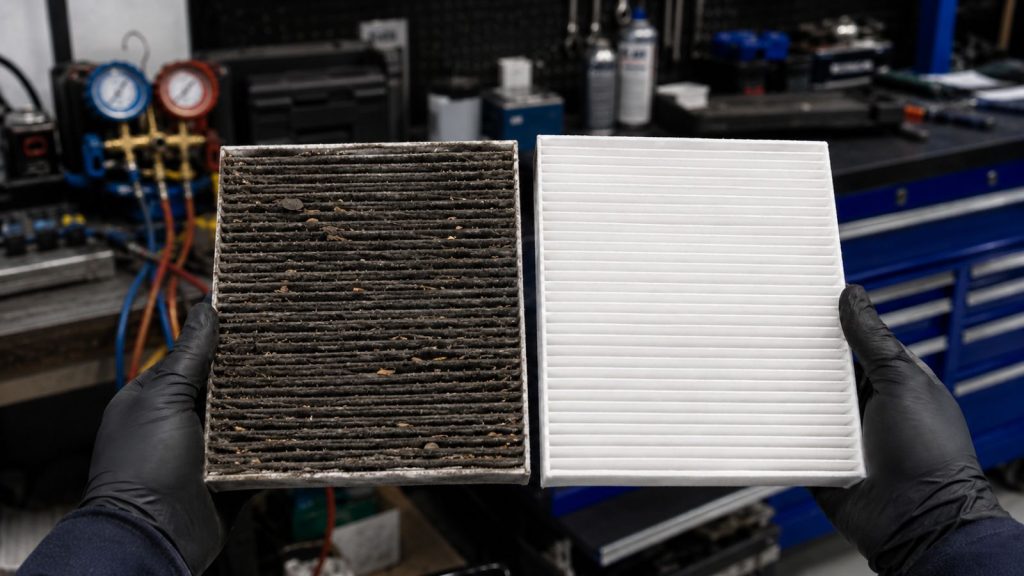
A/C filters do more than keep dust out of the cabin. In a modern system, airflow, refrigerant movement, moisture control, and expansion valve operation all depend on clean, unrestricted components. When we inspect A/C performance in Chandler heat, we check cabin filter condition, evaporator airflow, refrigerant charge, pressure behavior, moisture risk, and restriction signs to see whether a small maintenance item is contributing to a larger cooling problem.
Why Small A/C Filters Matter More Than They Seem
Most drivers think about engine oil, fuel filters, and air filters long before they think about A/C filtration. But the A/C system has its own protection points. The cabin air filter protects the air side of the HVAC system, while the receiver-drier or desiccant element protects the sealed refrigerant side.
These parts do different jobs, but both affect long-term A/C performance. The cabin filter helps keep dust, leaves, lint, and debris away from the blower and evaporator. The desiccant element helps absorb moisture and trap small particles inside the refrigerant loop.
In Chandler’s dusty conditions, those jobs matter. Fine caliche dust can load a cabin filter quickly, and heat can make moisture control inside the A/C system even more important. When filtration is ignored, the system may lose airflow, develop restrictions, or place extra stress on expensive components.
How the Cabin Filter Protects Evaporator Airflow
The cabin air filter sits in the airflow path before air reaches the blower and evaporator. When it is clean, the blower can move air across the evaporator more efficiently. That airflow is what allows the A/C system to remove heat from the cabin.
When the filter becomes restricted, less air moves across the evaporator. The vents may feel weak, the cabin may cool more slowly, and the system may struggle during long idle or stop-and-go driving. In some cases, reduced airflow can also contribute to evaporator icing or unstable vent temperatures.
A dirty cabin filter does not automatically mean the compressor is failing. It does mean the A/C system may be operating under poor airflow conditions. Replacing the filter is a simple step that can restore air movement and help the rest of the system work closer to its intended range.
What the Receiver-Drier and Desiccant Element Do
The receiver-drier or accumulator is part of the sealed refrigerant circuit. Depending on the vehicle design, it may contain a desiccant bag or cartridge that helps absorb moisture inside the system. Moisture matters because it can affect refrigerant flow, oil condition, corrosion risk, and expansion valve operation.
The desiccant element also helps trap small particles moving through the refrigerant loop. This is important because modern A/C systems use precise components, including thermal expansion valves, control valves, and compressors with tighter internal tolerances.
Receiver-drier service is especially important when the A/C system has been opened for repair. Once the sealed loop is exposed to air, moisture can enter. Replacing the drier or desiccant element when required helps restore moisture control before the system is evacuated and recharged.
How Moisture and Debris Affect Expansion Valves
The expansion valve controls refrigerant flow into the evaporator. It needs a clean, stable refrigerant supply to operate correctly. When debris, moisture, or degraded material reaches the valve, refrigerant flow may become restricted or inconsistent.
A restricted expansion valve can create symptoms that feel like several different problems. The vents may cool at first and then warm up, pressures may look uneven, or the compressor may cycle differently than expected. In some cases, the system may appear low on refrigerant even though the real problem is a flow restriction.
This is why A/C diagnosis should not rely on a quick top-off. If the system has moisture contamination, debris, or a restricted valve, adding refrigerant will not solve the underlying issue. The refrigerant loop needs to be tested as a system.
Why Preventive Filter Service Helps Reduce A/C Stress
Preventive A/C filter service is about reducing avoidable strain. A clean cabin filter helps preserve airflow, while a healthy desiccant element helps protect the refrigerant loop from moisture-related problems. Together, they support better heat transfer and more stable system operation.
- Cabin Filter: Helps maintain airflow across the evaporator and reduces dust entering the HVAC case.
- Receiver-Drier or Desiccant Element: Helps control moisture and capture small particles inside the refrigerant circuit.
- Expansion Valve Protection: Cleaner refrigerant flow reduces the chance of debris-related restriction.
- Compressor Support: Better airflow and cleaner refrigerant conditions can help reduce unnecessary compressor workload.
- System Efficiency: When airflow and refrigerant flow are stable, the A/C system can cool more consistently in hot weather.
These parts are not magic shields against every A/C failure. Compressors can still fail from age, low refrigerant, overcharge, oil imbalance, electrical issues, or poor condenser airflow. But keeping filtration and moisture control in good condition is one of the simpler ways to reduce avoidable A/C stress.
Why Chandler Heat Makes Small Restrictions More Noticeable
In cooler weather, a restricted cabin filter or aging desiccant element may not create an obvious complaint. The vents may still feel cool enough during a short drive. Once the temperature rises and the vehicle sits in traffic, small restrictions become easier to feel.
Chandler heat increases the load on the evaporator, condenser, compressor, and blower system. If airflow is weak, the cabin takes longer to cool. If moisture or debris affects refrigerant flow, pressure behavior may become less stable. If the condenser is also dirty or the charge is incorrect, the system has even less margin.
That is why A/C maintenance should be checked before the hottest part of the season. Small service items are easier to address before they contribute to poor cooling, repeat complaints, or unnecessary part replacement.
A/C Filter and Desiccant Maintenance in Chandler
A good A/C inspection should separate airflow problems from refrigerant loop problems. The cabin filter, blower output, evaporator performance, refrigerant charge, pressure readings, and condenser airflow all need to be considered together.
When we check a vehicle for A/C filter or desiccant-related concerns, we look for patterns. Weak vent airflow may point toward a restricted cabin filter or blower issue. Unstable pressure behavior may point toward charge, airflow, expansion valve, or moisture concerns. Evidence of contamination may require deeper testing before parts are replaced.
For A/C airflow, cabin filter, or receiver-drier concerns in Chandler, Copperhead Diesel Performance at 145 E Highland St, Chandler, AZ 85225 can inspect filter condition, refrigerant charge, pressure behavior, moisture risk, and airflow before recommending service.
Frequently Asked Questions
Can a dirty cabin air filter be cleaned with compressed air?
No. A dirty cabin air filter should usually be replaced, not cleaned with compressed air. Blowing air through the filter can damage the media or leave fine dust trapped inside the pleats, so replacement is the cleaner and more reliable option.
Does the receiver-drier or desiccant element need replacement?
Yes, when the manufacturer recommends it or when the A/C system has been opened for service. The desiccant material helps absorb moisture inside the sealed refrigerant loop, and it can become saturated over time or after exposure to air.
Can a blocked expansion valve make the A/C blow cold and then warm?
Yes, it can. A restriction at the expansion valve may cause unstable refrigerant flow, uneven pressures, changing vent temperatures, or compressor cycling. Those symptoms should be diagnosed with pressure readings, temperature checks, refrigerant charge verification, and system history.
Can a clogged cabin filter affect fuel mileage?
Yes, but usually only slightly. The bigger issue is comfort and A/C efficiency. A restricted cabin filter can reduce airflow, slow cabin cooling, and make the system work harder to reach the temperature setting.