Rideshare and high-mileage transport vehicles collect more dust, moisture, odors, and cabin filter debris than normal daily drivers. In Chandler’s dry, dusty conditions, evaporator foaming and proper cabin air filtration can help reduce odor-causing buildup, improve airflow, and keep the A/C system cleaner for passengers and drivers.
Rideshare vehicles put the A/C system through heavier use because doors open often, passengers bring in moisture and odors, and fine desert dust can enter through the fresh air intake. Over time, that mix can load the cabin filter, collect inside the HVAC case, and leave the vents smelling stale at startup. When we inspect a high-mileage rideshare or transport vehicle, we check the cabin filter, evaporator drain, blower airflow, and signs of buildup to find whether the odor is coming from trapped moisture, restricted airflow, or residue on the evaporator core.
Why Rideshare Vehicles Develop A/C Odors Faster
A normal commuter might carry one or two people most days. A rideshare vehicle can carry dozens of passengers in a week, sometimes with luggage, food, perfumes, work gear, or airport traffic dust coming in with them. That extra cabin activity adds more odor, moisture, and debris to the HVAC system.
The evaporator core naturally gets wet during A/C operation because moisture from the air condenses on the cold fins. In Chandler conditions, fine dust can mix with that moisture and create residue inside the HVAC case. When the truck sits after a long shift, that damp residue can become the source of musty or stale vent odor.
This is why the smell is often strongest right when the A/C first turns on. Air begins moving across the evaporator and pushes trapped odor from the case into the cabin before the system has stabilized.
How Dust and Moisture Build Up on the Evaporator
The cabin air filter is the first line of defense, but it does not catch everything forever. As the filter loads up with desert dust, airflow can drop, and smaller particles may continue moving through the system. If the filter is missing, cheap, damaged, or overdue, more debris can reach the blower and evaporator area.
Once debris reaches the evaporator, moisture helps it stick to the fins and case surfaces. That buildup can hold odor and may reduce how easily air moves through the core. In high-mileage diesel transport vehicles, this can show up as weaker airflow, stale smell, longer cabin cool-down time, or uneven vent output.
The issue is not always dramatic. Sometimes the A/C still cools, but the airflow feels restricted or the cabin never smells clean. That is when sanitation and filtration should be checked together instead of just spraying fragrance into the vents.
What Evaporator Foaming Does Inside the HVAC Case
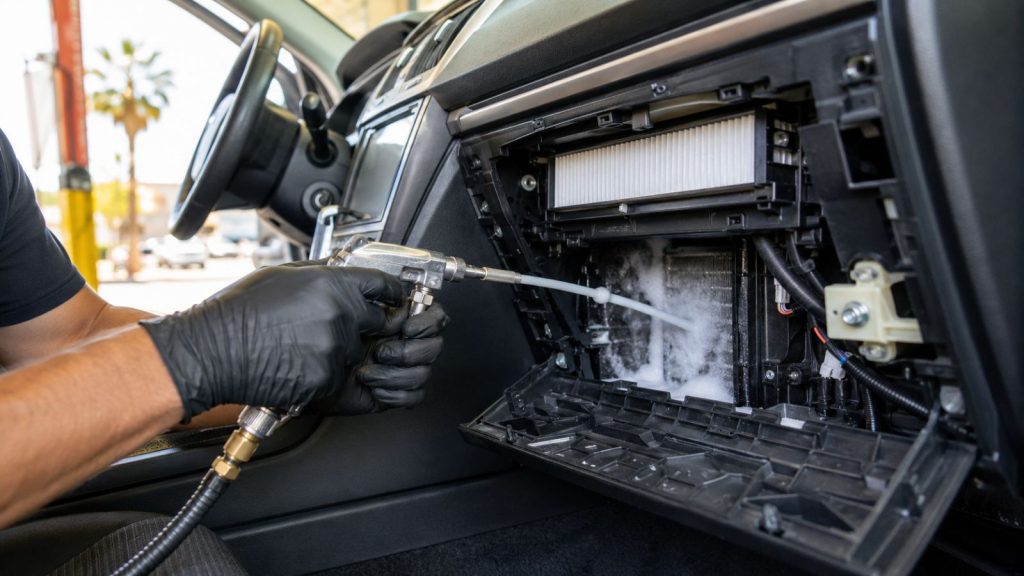
Evaporator foaming is designed to reach the inside of the HVAC case where normal vent sprays do not clean well. A proper service focuses on the evaporator area, the case surfaces, and the drain path so odor-causing buildup can be loosened and carried out of the system.
- Application: Cleaner is applied near the evaporator area, often through an access point that allows the product to reach the HVAC case.
- Expansion: The foam spreads around the evaporator fins and case surfaces where dust film and moisture-related residue can collect.
- Breakdown: As the foam turns into liquid, it carries loosened debris and residue toward the condensate drain.
- Drain Check: The drain path should be clear so the liquid and loosened buildup can exit properly instead of staying inside the case.
Foaming is not a cure for every A/C smell. If the cabin filter is loaded, the drain is clogged, the blower case is contaminated, or the vehicle has moisture intrusion elsewhere, those issues still need to be addressed. The best result usually comes from cleaning the evaporator area and replacing the cabin filter at the same visit.
Why Cabin Filter Choice Matters for Chandler Drivers
Cabin filters matter more in rideshare vehicles because the HVAC system runs for long hours and handles more outside air exposure. In dusty areas around Loop 202, the Price Corridor, construction zones, and airport routes, filters can load faster than they would in lighter-duty driving.
- Standard Cabin Filter: Helps catch larger dust, lint, leaves, and debris before they reach the blower and evaporator area.
- Activated Carbon Filter: Can help reduce certain odors, exhaust smells, and outside-air contaminants that passengers may notice inside the cabin.
- Higher-Efficiency Filter: May capture finer dust when it is compatible with the vehicle’s HVAC design.
- Airflow Fit: The filter should not be so restrictive that it weakens blower output or reduces A/C performance.
The best filter is not always the thickest one. The right choice balances dust capture, odor control, and proper airflow through the HVAC case.
How Airflow Testing Helps Confirm HVAC Restriction
Airflow testing helps separate an odor issue from an airflow issue. If the fan is on high but the vents feel weak, the problem may be a restricted cabin filter, debris in the blower area, buildup on the evaporator, or a drain concern that allows moisture to stay inside the case.
When we check these systems, we look at more than the smell. We inspect the filter condition, verify drain flow, check for debris around the blower and case, and compare vent output before deciding what service is needed. If the evaporator area is accessible for visual inspection, that can help confirm whether buildup is part of the problem.
This matters because replacing the filter alone may not remove odor already sitting inside the HVAC case. At the same time, foaming the evaporator without replacing a saturated filter may allow the smell and dust load to come right back.
Rideshare A/C Sanitation for High-Mileage Chandler Vehicles
For rideshare and high-occupancy vehicles, A/C sanitation is really about controlling buildup before it becomes a repeat complaint. A clean cabin filter, clear condensate drain, and cleaner evaporator area can help the system move air more effectively and reduce stale vent odor.
Drivers should pay attention to early signs like musty smell at startup, weak airflow, dust from the vents, water not draining under the vehicle during A/C use, or passengers noticing stale cabin air. These symptoms do not always mean a major A/C repair is needed, but they do mean the HVAC case and filter system should be inspected.
For rideshare A/C odor or airflow concerns in Chandler, Copperhead Diesel Performance at 145 E Highland St, Chandler, AZ 85225 can inspect the cabin filter, evaporator drain, airflow, and HVAC case condition before recommending cleaning or filtration service.
Frequently Asked Questions
Can I just spray disinfectant into my vents to remove the smell?
No, vent sprays usually do not solve the source of the odor. They may temporarily cover the smell, but they do not remove residue on the evaporator, replace a dirty cabin filter, or clear a restricted condensate drain. If the odor keeps returning, the HVAC case and filter should be inspected.
How often should a Chandler rideshare driver replace the cabin filter?
High-mileage rideshare drivers may need cabin filter replacement more often than normal commuters. Dusty routes, airport trips, construction zones, and long A/C run times can load the filter faster. A 3-month or mileage-based inspection schedule is reasonable, but the exact interval depends on driving conditions and filter type.
Is evaporator foaming safe for the HVAC system?
Yes, when the correct product and procedure are used. The cleaner should be applied where it can reach the evaporator area and drain properly through the condensate drain. Care should be taken around electrical components, blower parts, and sensors inside or near the HVAC case.
Why does my A/C smell worse when I first turn it on?
That first odor burst often comes from moisture and residue sitting on or near the evaporator after the vehicle has been parked. When the blower starts, air moves across that area and carries the stale smell into the cabin. If the smell fades but keeps returning, the evaporator area and cabin filter may need attention.