Horse trailer hauling adds heat load to the diesel engine, cooling stack, and A/C system. In Chandler desert conditions, a truck may cool well when unloaded but struggle during towing, grades, or slow traffic. This guide explains how fan clutch response, condenser airflow, refrigerant charge, and cooling stack cleanliness affect A/C performance.
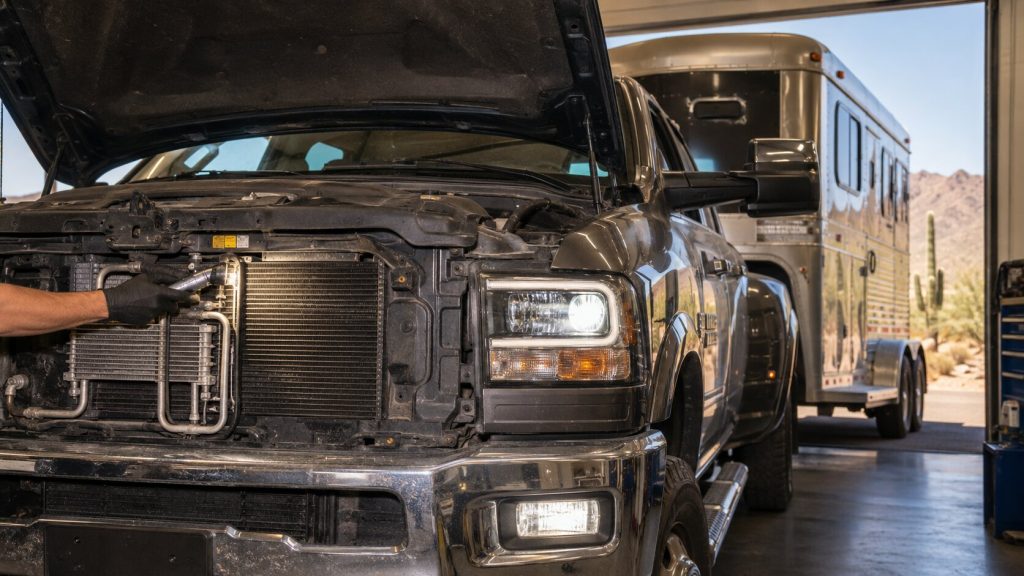
Heavy towing asks more from the A/C system than normal commuting. When a diesel truck pulls a horse trailer through Chandler heat or routes near the Gila River Indian Community, the engine, transmission, turbo system, and cooling stack all work harder. If the truck cools fine around town but warms up while towing, we check refrigerant charge, high-side pressure, fan clutch response, condenser airflow, cooling stack condition, and engine bay heat soak to see whether the system is low on refrigerant, losing airflow, or being pushed beyond its heat-rejection capacity.
Why Heavy Towing Makes Dziesel A/C Work Harder
A diesel A/C system depends on heat transfer. The evaporator absorbs heat from the cabin, the compressor moves refrigerant through the system, and the condenser releases that heat at the front of the truck. When the truck is unloaded and moving at highway speed, airflow through the grille helps the condenser do its job.
Hauling a horse trailer changes the load. The engine produces more heat, the turbo system works harder, and the cooling stack has to reject more heat at the same time the A/C condenser is trying to release cabin heat. If airflow is weak or the condenser is restricted, vent temperatures can rise even though the A/C system may still be operating.
That is why towing-related A/C complaints often appear only under load. A truck may feel cold during a short drive, then struggle during a grade, a long idle, or slow traffic with the trailer attached.
How Engine Bay Heat Soak Affects A/C Performance
Heat soak happens when under-hood temperatures build faster than the truck can release them. During towing, higher engine load can increase heat around the radiator, charge air cooler, turbo area, A/C lines, and condenser. That surrounding heat makes it harder for the A/C system to keep pressures and vent temperatures stable.
The A/C condenser sits in a demanding location because it has to reject heat into air that may already be warmed by the road, engine bay, and nearby heat exchangers. If the truck is moving, airflow helps carry that heat away. If traffic slows, the fan clutch and cooling stack condition become much more important.
This does not mean every towing A/C issue is caused by engine heat. The real cause may be low refrigerant, an overcharge, a weak fan clutch, debris in the cooling stack, a restricted condenser, or compressor control behavior. Heat soak simply makes those problems easier to notice.
Why the Cooling Stack Matters During Horse Trailer Hauls
The cooling stack is the group of heat exchangers at the front of the truck. Depending on the vehicle, it may include the A/C condenser, radiator, charge air cooler, transmission cooler, oil cooler, and other components. Air has to move through these layers for the systems behind them to work properly.
Dust, bugs, hay chaff, road debris, and bent fins can reduce airflow through the stack. A condenser may look acceptable from the front while debris is trapped between layers. During light driving, that restriction may not be obvious. During towing, it can show up as rising A/C pressure, warmer vent temperatures, or reduced cooling at idle.
For horse trailer haulers, this matters because long routes, slow turns, staging areas, and desert traffic can keep the truck under heat load for extended periods. A clean cooling stack helps the truck manage engine heat and A/C heat more effectively.
How Fan Clutch Response Supports Condenser Airflow
At highway speed, natural airflow helps the condenser release heat. At low speed or idle, the fan has to pull air through the cooling stack. If the fan clutch does not engage properly, the condenser may not receive enough airflow when the truck needs it most.
A weak fan clutch can make the A/C seem inconsistent. The vents may feel cold while driving but warm up in traffic, at a staging area, or after pulling a grade. The engine temperature gauge may still look normal because the A/C condenser can struggle before the engine shows an overheating concern.
Testing fan clutch response means comparing what the truck is requesting with what the fan is actually doing. Depending on the system, that may involve scan data, fan command, fan speed feedback, pressure readings, and heat-load testing. The point is to confirm airflow instead of guessing from sound alone.
What to Check Before Hauling Through Desert Heat
A pre-haul A/C and cooling inspection should focus on the parts that help the truck reject heat under load. The goal is not just to make the vents cold in the driveway. The system needs to stay stable during towing, idle, and slow traffic.
- Refrigerant Charge: The charge should be verified by weight when service is needed, not guessed by pressure alone.
- Condenser Condition: Bent fins, debris, or restricted airflow can reduce heat transfer.
- Cooling Stack Cleanliness: Dust and debris between heat exchangers can limit airflow even when the front looks clean.
- Fan Clutch Response: The fan should respond properly when pressure and temperature demand more airflow.
- Cabin Airflow: A restricted cabin filter or weak blower output can make the A/C feel worse even if refrigerant pressures are acceptable.
- Trailer Route Planning: During extreme heat, timing the haul, checking trailer ventilation, and monitoring animals are still important separate steps from truck A/C repair.
These checks help identify weak points before the truck is already loaded and working hard in desert conditions.
Horse Trailer Hauling A/C Diagnostics in Chandler
When a towing A/C complaint comes in, the most useful test is one that reflects real operating conditions. A quick vent temperature check may not show the problem if the truck is unloaded, cool, or moving with good airflow. We want to see what happens when heat load increases.
That can include checking pressure behavior at idle, verifying fan response, measuring condenser temperature change, inspecting the cooling stack, and confirming refrigerant charge accuracy. If the A/C only struggles while towing, those values help separate airflow problems from refrigerant or compressor concerns.
For horse trailer hauling A/C concerns in Chandler, Copperhead Diesel Performance at 145 E Highland St, Chandler, AZ 85225 can check condenser airflow, fan clutch response, refrigerant charge, pressure behavior, and cooling stack condition before your next desert haul.
Frequently Asked Questions
Can towing a horse trailer make my diesel A/C blow warmer?
Yes. Towing adds heat load to the engine, cooling stack, and A/C system. If condenser airflow, fan clutch response, refrigerant charge, or cooling stack cleanliness is already marginal, the A/C may cool normally when unloaded but struggle once the trailer is attached.
Is it safe to keep hauling if my A/C quits?
It should be taken seriously, especially in extreme heat. A/C failure may point to a cooling stack, fan, pressure, or refrigerant issue that needs inspection. For livestock, cab A/C is only one part of hot-weather hauling awareness; trailer ventilation, water, timing, and monitoring for heat stress also matter.
Can a tuner affect A/C performance while towing?
Yes, it can. Some tuning changes increase power and heat load under towing conditions. If the cooling system and airflow are not able to manage that added heat, the A/C may be one of the first systems to show performance problems during grades, idle, or slow traffic.
Should I hear the fan clutch when the truck is hot and under load?
Often, yes. A heavy-duty fan may become noticeably louder when it engages under heat load. However, sound alone is not a complete diagnosis. Fan command, fan speed, pressure readings, and operating conditions should be checked before calling the fan clutch good or bad.