Control arm replacement restores proper suspension geometry, steering stability, and tire wear after bushing or ball joint failure. In Chandler, AZ, heat, dry conditions, and rough pavement accelerate wear. Correct installation, torque procedures, and post-repair alignment are essential to prevent repeat suspension issues and uneven tire wear.
Why Control Arms Matter More Than Most Drivers Realize
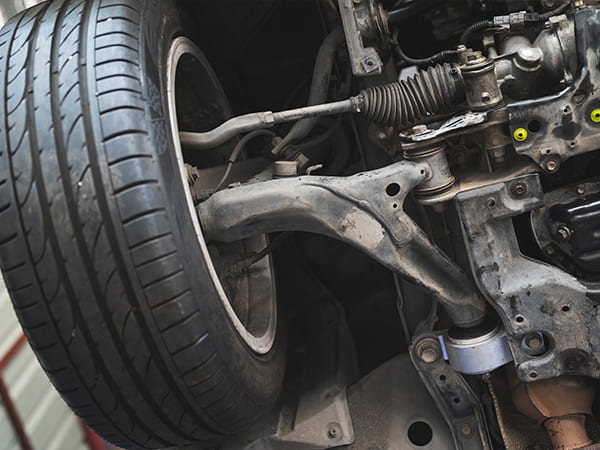
Control arms connect the vehicle’s frame to the steering knuckle. They allow the suspension to move up and down while keeping the wheel aligned with the body. When bushings crack or ball joints loosen, handling changes immediately.
In our experience providing suspension repair in Chandler, control arm wear often shows up as uneven tire wear, steering drift, or clunking over bumps. Because Arizona roads combine expansion cracks, construction zones, and extreme summer heat, suspension components face constant stress.
Ignoring worn control arms does not just affect comfort. It affects alignment, braking stability, and tire life.
How Control Arms Work Within the Suspension System
Most vehicles use upper and lower control arms in the front suspension. The control arm is like a strong, movable link in your car’s suspension. It’s connected to your car’s frame on one end and the steering knuckle (the part that holds your wheel) on the other.
It has a few key parts:
- Bushings: These are usually rubber or filled with fluid, and they’re there to soak up all the bumps and vibrations from the road.
- Ball Joint: This is a pivot point, allowing the wheel assembly to move up and down and to turn left and right for steering.
- Mounting Points: These are where it bolts up to the car’s body and the wheel assembly.
The control arm’s job is to keep your wheels pointed exactly where they should be, maintaining the proper camber and caster angles. When those rubber bushings wear out, or the ball joint gets loose and develops “play,” the suspension gets sloppy. This means that when you hit a bump or turn, the wheel’s alignment shifts around instead of staying solid.
What Commonly Goes Wrong in Chandler Vehicles?
Heat is the main factor in Arizona suspension wear.
- Bushing Dry Rot and Cracking
High temperatures cause rubber bushings to harden and crack. Once that flexibility is gone, movement becomes uncontrolled.
- Ball Joint Wear from Road Debris
Dust and fine sand common in Chandler can compromise protective boots. Once grease escapes, wear accelerates.
- Alignment Drift from Rough Pavement
Expansion joints and uneven surfaces increase load on suspension pivots, shortening component life.
- Premature Tire Wear
When control arms shift even slightly, camber angles change. Tires begin wearing on inner or outer edges.
- Heavy Loads and Lifted Suspensions
Trucks used for towing, hauling, or equipped with lift kits place added stress on control arm bushings and ball joints. Increased suspension angles and constant weight load accelerate wear, especially in high-heat conditions like Chandler.
We frequently see control arms needing replacement before 100,000 miles in vehicles exposed to extreme heat and heavy commuting.
Step-by-Step Overview: How Control Arms Are Replaced
Replacing a control arm isn’t just about swapping parts; it requires attention to detail, especially when it comes to lifting and torquing. Here’s the general playbook:
- Lift the vehicle safely and make sure it’s fully supported.
- Take off the wheel on the side you’re working on.
- Separate the ball joint from the steering knuckle—this frees up the end of the arm.
- Remove the mounting bolts that connect the old arm to the frame.
- Install the shiny new control arm.
- Tighten the bolts only once the suspension is settled at its normal ride height..
- Get a professional wheel alignment.
Here’s the trick mechanics know: You absolutely must tighten those bushing bolts when the car is sitting on its wheels (or simulated ride height). If you tighten them while the suspension is hanging, the bushings will be twisted and fail almost immediately.
That’s why getting a post-install alignment and following the correct torque procedure is non-negotiable for a lasting repair.
Symptoms vs. Root Causes
Drivers often describe:
- Clunking over bumps
- Steering wander
- Uneven tire wear
- Vehicle pulling to one side
These symptoms point to geometry instability. But the root cause may be:
- Torn control arm bushings
- Loose ball joints
- Bent control arm from curb or pothole impact
- Improper prior installation
Without inspection, symptoms alone can be misleading. Replacing only one component may not solve the underlying suspension imbalance.
Preventive Maintenance and Best Practices
Control arms do not usually fail suddenly. Wear develops gradually. Preventive practices include:
- Inspecting suspension during routine service
- Checking bushings for cracks during brake work
- Monitoring tire wear patterns
- Scheduling alignment after suspension repairs
In Chandler, summer inspections are especially important. Heat-related degradation accelerates during extended triple-digit temperatures. Catching small bushing cracks early can prevent full arm replacement later.
Cost, Risk, and Downtime Considerations
Catching those control arm issues early is a smart move that keeps the repair job simple. If you let it slide, though, you might face:
- Having to buy new tires sooner than expected.
- Extra strain on your steering parts.
- A wobbly alignment that just won’t stay put.
- A ball joint failure that’s actually a serious safety risk.
When a ball joint is really worn out, it can actually separate, and that means you lose control of your steering. It doesn’t happen often, but it’s a major danger.
Fixing it right away usually means minimal downtime. But if you wait, you’re almost certainly looking at a more expensive and complicated repair.
Local Driving Patterns That Accelerate Wear
In Chandler, daily highway commuting combined with summer heat places steady load on front suspension systems. Vehicles used for towing or hauling experience even more strain.
We commonly see lifted trucks and diesel vehicles with accelerated control arm wear due to increased suspension angles and added weight.
Arizona’s dry climate may reduce rust, but it increases rubber degradation.
Final Thoughts on Suspension Integrity
Control arms are super important for keeping your steering stable, your alignment spot-on, and your whole suspension system healthy. Especially here in Chandler’s intense heat, those rubber bushings and ball joints can wear out quicker than you might think. Catching issues early and ensuring a correct installation is key to saving your tires, keeping your handling sharp, and avoiding bigger, more expensive suspension headaches down the road.
When a Professional Suspension Evaluation Is Appropriate
If you notice steering looseness, clunking, or abnormal tire wear, a structured suspension inspection provides clarity.
At Copperhead Diesel Performance, we evaluate control arm bushings, ball joints, and overall suspension geometry before recommending replacement. For drivers in Chandler, confirming suspension integrity protects both tire investment and steering safety.
Frequently Asked Questions
Can I replace just the bushings instead of the entire control arm?
In some vehicles, yes. However, many modern arms use sealed or integrated ball joints, making full replacement more practical.
Do I need an alignment after replacing control arms?
Yes. Any suspension component affecting geometry requires alignment to prevent uneven tire wear.
How long do control arms last in Arizona?
Heat and driving conditions often shorten lifespan compared to milder climates.
Is it safe to drive with worn control arm bushings?
Short distances may be possible, but steering stability and tire wear will worsen over time.
What happens if a ball joint fails completely?
In extreme cases, the wheel can lose proper support, leading to loss of steering control.