Arizona trail dust and caliche can pack into A/C condenser fins and cooling stack layers. When airflow and heat transfer are reduced, the system may develop higher pressure, warmer vent temperatures, or compressor protection shutdowns in Chandler heat. This guide explains safe condenser cleaning, coil restoration, and post-trail A/C checks.
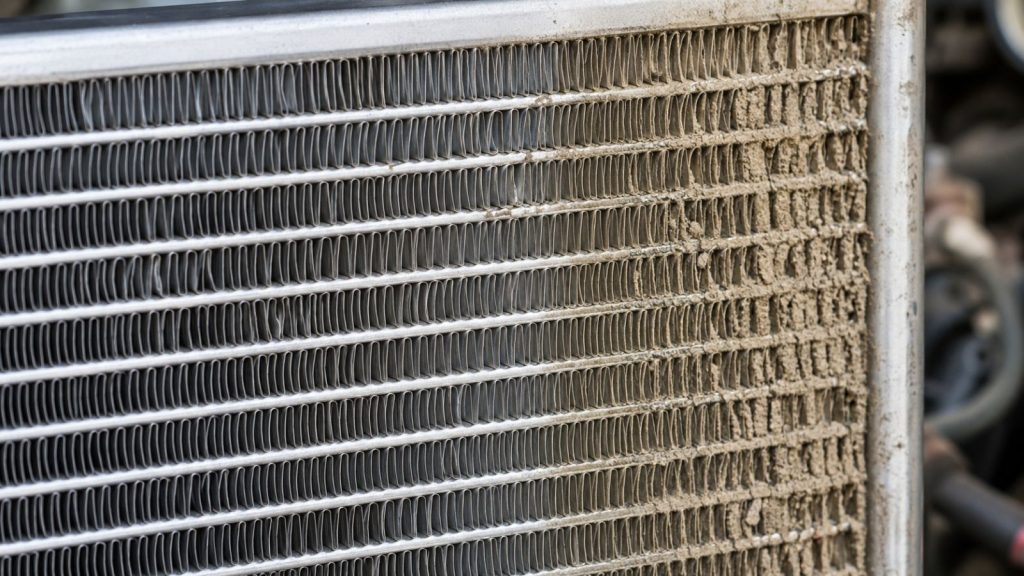
Off-road driving can pack fine dust, sand, bugs, and caliche into the A/C condenser and cooling stack, limiting airflow after a trail run. A rig may cool normally at first, then struggle later in traffic when that debris prevents heat from leaving the condenser. When we inspect weak A/C after trail use, we check condenser condition, cooling stack debris, high-side pressure, fan airflow, refrigerant charge, and bent or blocked fins to see whether the problem is low refrigerant, poor airflow, or reduced heat rejection.
Why Trail Dust Reduces A/C Condenser Efficiency
The A/C condenser is a heat exchanger. Hot refrigerant leaves the compressor and enters the condenser so heat can be released into the passing air. For that to happen, air has to move freely through the thin aluminum fins.
Arizona trail dust can interrupt that process. Fine caliche, silt, and road debris can settle between the fins and reduce surface contact with moving air. Once dust mixes with moisture, mud, or repeated heat cycles, it can become harder to rinse away from the deeper parts of the cooling stack.
This buildup acts like an insulating layer. Instead of releasing heat efficiently, the condenser holds more heat, which can raise high-side pressure and reduce A/C performance in hot weather.
How Caliche Buildup Raises High-Side Pressure
A dusty condenser may not cause an obvious problem while the vehicle is sitting in the shade or moving at light load. The issue often shows up later, especially after a trail run when the vehicle transitions back to highway speed, traffic, or hot pavement.
If the condenser cannot reject heat, pressure on the high side of the A/C system can rise. When pressure moves outside the expected operating range, the vehicle may reduce or disable compressor operation to protect the system. To the driver, that can feel like the A/C suddenly stopped cooling.
This does not automatically mean the compressor has failed. A blocked condenser, weak fan, dirty cooling stack, incorrect refrigerant charge, or pressure sensor issue can create similar symptoms. That is why airflow and pressure behavior should be checked together before replacing parts.
Why Pressure Washing Can Damage Condenser Fins
A quick blast at the car wash may seem like the easiest way to clean trail dust, but it can create problems if the spray is too strong or used too close to the fins. Modern condenser fins are thin, and concentrated high-pressure water can fold them over.
Bent fins reduce airflow through the condenser. If enough fins are flattened, the A/C system may still have clean-looking metal on the surface but less air passing through the core. That can make heat rejection worse instead of better.
A safer approach uses low-pressure rinsing, proper direction, and cleaner that is safe for aluminum components. The goal is to lift debris out of the fins without crushing the air passages that the condenser needs to work.
How Chemical Coil Cleaning Restores Airflow
Chemical coil cleaning is designed to loosen dust and residue that a basic rinse may not remove. The process should be controlled and gentle because the condenser and nearby cooling stack components are easy to damage when cleaned aggressively.
- Low-Pressure Rinse: Loose dust and surface debris are rinsed away without bending the fins.
- Aluminum-Safe Cleaner: A non-corrosive cleaner helps loosen packed dirt, caliche film, and trail residue from the fin openings.
- Dwell Time: The cleaner is allowed to work long enough to break down buildup without drying on the surface.
- Careful Final Rinse: The loosened debris is flushed out with controlled water flow.
- Fin Inspection: Bent fins can be straightened when accessible so airflow has a clearer path through the core.
The exact method depends on the vehicle, the condenser condition, and how much debris is trapped between the cooling stack layers. Some buildup may sit deeper than what can be seen from the grille.
What Live Pressure and Temperature Testing Can Reveal
A condenser can look dirty and still work acceptably, or it can look fairly clean from the front while debris is trapped deeper in the stack. Testing helps separate appearance from actual A/C performance.
When we test these systems, we compare high-side pressure, low-side pressure, vent temperature, fan operation, and condenser temperature change. If high-side pressure rises quickly during hot idle or slow driving, the system may not be rejecting heat effectively.
Temperature checks across the condenser can also help. Uneven heat patterns may suggest airflow restriction, internal condenser concerns, or debris trapped between components. Those readings are more useful when combined with refrigerant charge verification and fan performance checks.
Off-Road A/C Cleaning for Chandler Trail Vehicles
Off-road A/C care should be part of post-trail maintenance, especially during dusty summer driving. If the vehicle has been through caliche dust, washes, mud, or construction-heavy routes, the condenser and cooling stack should be inspected before the next hot commute.
Early signs of a condenser airflow issue include A/C that cools at first but warms up in traffic, compressor cycling, higher-than-expected pressure readings, or cooling that gets worse after a trail run. These symptoms do not always mean the system needs major repair, but they do mean airflow and heat rejection should be checked.
For off-road A/C performance concerns in Chandler, Copperhead Diesel Performance at 145 E Highland St, Chandler, AZ 85225 can inspect condenser fins, cooling stack debris, high-side pressure behavior, refrigerant charge, and airflow before recommending cleaning or repair.
Frequently Asked Questions
Can I use regular soap and a garden hose to clean my condenser?
A gentle hose rinse can help remove loose surface dust, but it may not remove packed caliche from deep in the condenser or cooling stack. Avoid high-pressure spray close to the fins, and use a cleaner that is safe for aluminum when deeper cleaning is needed.
Can live A/C data show the difference between a blocked condenser and low refrigerant?
Yes, it can help. Low refrigerant and poor condenser airflow can create different pressure patterns, but the system should be evaluated as a whole. High-side pressure, low-side pressure, vent temperature, fan operation, condenser temperature change, and recovered charge amount all help narrow the cause.
Will a dirty condenser damage my A/C compressor?
It can contribute to compressor stress over time. When the condenser cannot reject heat properly, high-side pressure can rise and the compressor may work harder. System protection may reduce or shut down compressor operation, but repeated heat and pressure problems should still be diagnosed.
Should I inspect the condenser after a dusty trail run?
Yes, especially during summer or after driving through heavy caliche dust, mud, or sandy washes. Catching loose debris early can make cleaning easier and may prevent buildup from packing deeper into the cooling stack after repeated heat cycles.
Do aftermarket grilles, bumpers, or winch mounts affect condenser cooling?
Yes, they can. Heavy bumpers, winches, thick mesh grilles, and lighting accessories may reduce airflow to the condenser and radiator area. If reduced airflow is combined with trail dust buildup, A/C pressure and vent temperature problems may show up sooner in hot weather.