Choosing between an AC compressor rebuild and a complete replacement depends on the condition of the compressor core, the type of failure, and the operating demands placed on the vehicle. In Chandler’s extreme summer heat, a proper evaluation helps determine whether a localized clutch or seal repair is appropriate or whether a new compressor is the better long-term solution.
Before selecting a repair path, verify the compressor’s internal condition. If oil inspection shows metallic debris, abnormal discoloration, or signs of internal wear, replacing the compressor may provide a more reliable repair when damage extends beyond external components.
Understanding Internal AC Compressor Wear and Swashplate Fatigue
The automotive AC compressor is the heart of the refrigeration system, operating under significant mechanical and thermal stress in heavy-duty truck applications. Many modern trucks use variable-displacement piston compressors that rely on an internal swashplate mechanism to adjust compressor output based on cooling demand.
Over time, heat exposure, pressure cycling, lubrication changes, and normal wear can reduce compressor efficiency and influence whether rebuilding or replacement is the better repair option. During Chandler’s extreme summer temperatures, AC systems often operate under higher loads for extended periods, which can expose existing wear inside the compressor.
Common internal wear patterns include:
- Piston and Cylinder Wall Wear: Reduced lubrication quality or prolonged operation under stress can damage the oil film between moving components, creating scoring and reduced compression efficiency.
- Swashplate and Bearing Wear: Wear in the swashplate assembly or internal bearings can affect compressor displacement control and create excessive internal movement.
- Valve Plate and Seal Wear: Repeated heat and pressure cycling can reduce sealing efficiency, lowering compressor performance and cooling output.
The Rebuild Viability Test and When You Can Save the Original Core
As a Master Tech, I only recommend a localized compressor repair when testing confirms the internal core remains healthy. If the compressor has clean oil, good compression performance, and no signs of internal wear, repairing an external component can be a practical alternative to complete replacement.
Replacing Worn Front Nose Shaft Seals
The front shaft seal behind the compressor pulley is exposed to heat, vibration, and environmental conditions during normal operation. In dusty environments like Chandler, debris around the clutch and shaft area can contribute to sealing surface wear over time. If the compressor oil is clean and the unit has not experienced lubrication loss, replacing the shaft seal may restore proper operation without replacing the entire compressor.
Diagnosing a Failing Electromagnetic Clutch
The compressor clutch uses an electromagnetic coil and air gap to engage the compressor pulley. Heat from extended idling, stop-and-go driving, and heavy AC demand can contribute to clutch wear or coil-related issues. If testing confirms normal compressor output, clean oil, and a clutch-only failure, replacing the clutch assembly may preserve a healthy compressor core.
Understanding the Long-Term Cost Difference Between Repair Options
When metallic debris is found inside the AC system, a clutch or seal repair may no longer address the underlying compressor condition. Internal wear can continue affecting compressor performance even after an external component has been replaced, which is why oil condition and system inspection are important before choosing a repair path.
The table below compares the cost, warranty considerations, and long-term factors between a localized component repair and a complete compressor replacement.
| Repair Pathway Option | Upfront Cost Consideration | Warranty Consideration | Long-Term Factors |
| Localized Component Repair (Clutch or Seal Only) | Lower initial repair cost when the compressor core remains healthy | Warranty typically applies to the replaced component | Depends on the condition of the remaining internal compressor components |
| New OEM / Tier-1 Compressor Assembly | Higher upfront investment | Typically includes manufacturer-backed parts coverage | Provides a new internal compressor assembly when wear or contamination is confirmed |
Choosing a complete compressor assembly can reduce the chance of repeat labor when internal wear or uncertain compressor condition is present. If a component repair does not address the underlying failure, additional service may be required, including refrigerant recovery, system evacuation, and another repair procedure. Evaluating the compressor core before selecting a repair path helps avoid unnecessary repeat work and added downtime.
The Copperhead Bench Evaluation Verifying Internal Mass Flow Integrity
At Copperhead Diesel Performance, we evaluate compressor condition before recommending whether a rebuild or replacement is appropriate. Before recommending a repair path, we execute an exact diagnostic mapping sequence on our shop floor:
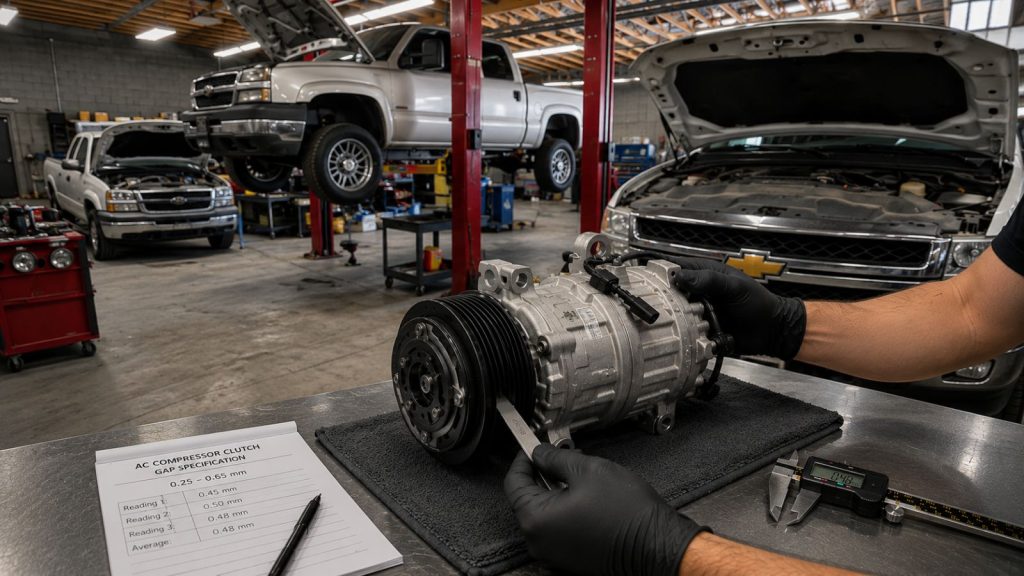
- Live Transducer Tracking: We compare compressor command, pressure response, oil condition, and system performance before recommending replacement.
- Fluid Purity Extraction: We pull a sample of oil directly from the compressor drainage plug to inspect for graphite darkening or silver metallic contamination.
- Physical Hub Tolerances: We use mechanical feeler gauges on the workbench to measure exact air gaps across the electro-magnetic surface, identifying hidden warp signatures caused by heat stress.
If the core clears every baseline check, we rebuild it using high-grade seals. If internal wear or contamination is confirmed, replacement may provide a more reliable repair path.
Preparing Your Truck AC System Before Summer Heat
A weak or noisy AC compressor should be evaluated before it creates additional repair concerns. In Chandler’s extreme summer temperatures, a compressor showing signs of wear may place additional stress on the AC system, especially during extended driving, idling, or heavy vehicle use.
Visit Copperhead Diesel Performance at 145 E Highland St Chandler, AZ 85225 for a professional compressor evaluation. We review compressor operation, oil condition, and system performance to determine whether a component repair or complete replacement is the appropriate path.
Is your compressor a candidate for a clutch or seal repair, or does internal wear point toward replacement? A proper evaluation can help determine the right repair before unnecessary parts are replaced.
Frequently Asked Questions
Can you rebuild a compressor if it has already seized up completely?
Usually, no. A seized compressor often has significant internal damage, such as worn pistons, damaged bearings, or scoring inside the compressor assembly. The repair decision depends on the extent of the damage, the amount of contamination present, and whether the rest of the AC system can be properly evaluated and cleaned.
Why does a new compressor warranty sometimes require replacing other AC components?
When a compressor experiences internal wear, debris can circulate through the AC system. Depending on the failure type and manufacturer requirements, additional components such as the condenser, expansion valve, or other system parts may need inspection or replacement to protect the new compressor and support warranty approval.
How can Chandler dust affect an AC compressor front seal?
Dust and debris around the compressor clutch and shaft area can contribute to wear on the front shaft seal over time. In dry, dusty environments like Chandler, keeping the compressor area clean and addressing early signs of leakage can help prevent further seal-related issues.
Is an aftermarket remanufactured compressor as reliable as a new OEM or Tier-1 unit?
It depends on the quality of the remanufacturing process, the replacement components used, and the application. A properly rebuilt compressor can be a suitable repair option in some situations, while a new OEM or Tier-1 compressor may provide a better choice when long-term durability, warranty coverage, or severe operating conditions are priorities.
How long can I drive with a noisy compressor clutch before it fails?
There is no reliable timeframe. A noisy clutch may indicate bearing wear, excessive air gap, coil issues, or another mechanical problem. Inspection is recommended because continued operation can increase the chance of additional damage, depending on the failure cause.