Front suspension problems affect steering control, tire wear, and braking stability. In Chandler’s heat and road conditions, worn ball joints, control arms, and shocks are common failure points. This guide explains how the front suspension works, warning signs to watch for, and why early diagnosis prevents costly repairs and unsafe driving.
Why Front Suspension Problems Matter
Your front suspension does more than smooth out bumps. It keeps your tires planted, maintains steering control, and supports braking stability.
When it starts to fail, you may notice:
- Loose or wandering steering
- Clunking over bumps
- Uneven tire wear
- Vehicle pulling while braking
In Chandler, AZ, extreme summer heat regularly exceeds 110°F. Prolonged heat dries out rubber bushings and accelerates wear in ball joints and control arms. Add rough expansion joints on Loop 202 and heavy commuter traffic, and front suspension wear becomes common.
Ignoring early warning signs often leads to faster tire wear, poor alignment retention, and higher long-term repair costs.
How the Front Suspension System Works
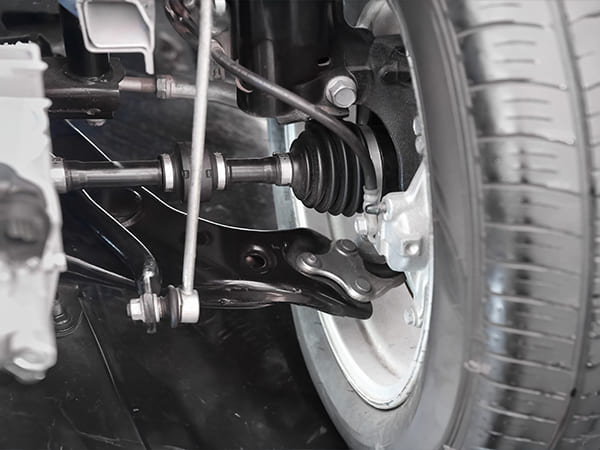
Most trucks and SUVs in Chandler use either independent front suspension (IFS) or a solid front axle setup. While designs vary, core components include:
- Control Arms – Connect the frame to the steering knuckle.
- Ball Joints – Allow pivot movement for steering and suspension travel.
- Tie Rods – Control steering direction.
- Shocks or Struts – Absorb impacts.
- Bushings – Cushion metal-to-metal contact.
- Sway Bar Links – Control body roll.
All of these parts work together to keep the wheel positioned correctly under load. When one component wears, it often stresses others. Suspension issues rarely stay isolated.
What Commonly Goes Wrong in Chandler Vehicles?
From what we routinely see in front suspension repair in Chandler, AZ, several patterns stand out:
1. Ball Joint Wear
High heat and heavy truck use accelerate grease breakdown. Once play develops, steering becomes unstable.
2. Control Arm Bushing Failure
Rubber bushings crack from heat cycling. This causes clunks, shifting alignment, and poor braking stability.
3. Shock and Strut Fatigue
Arizona roads may look smooth, but constant expansion joints and uneven pavement wear shocks quickly. Once damping weakens, the front end bounces excessively.
4. Tie Rod Looseness
Tie rods wear gradually. Drivers often notice vague steering before realizing the issue.
5. Lift Kit Geometry Problems
Chandler has a strong diesel truck and off-road community. Poorly installed lift kits or incorrect angles can prematurely wear suspension components.
What You Notice vs. What’s Actually Worn
Many drivers search “front suspension noise Chandler” after hearing clunks. But symptoms can overlap.
| Symptom | Possible Root Cause |
| Clunking over bumps | Ball joints, sway bar links, control arm bushings |
| Steering wander | Tie rods, ball joints, alignment shift |
| Uneven tire wear | Worn components causing alignment change |
| Vibration at highway speed | Suspension play or shock failure |
| Pulling while braking | Control arm movement or worn bushings |
Replacing only the obvious worn part without checking surrounding components often leads to repeat visits. Proper inspection means checking the entire front end under load.
Preventive vs. Reactive Suspension Repairs
Preventive maintenance saves money. Reactive repairs cost more.
Preventive Approach:
- Annual suspension inspections
- Alignment checks after pothole impact
- Early replacement of worn bushings
- Shock replacement before complete failure
Reactive Repairs:
- Ignoring noises
- Driving with looseness
- Waiting until tire wear is severe
- Allowing steering instability to worsen
Once tire wear starts, damage compounds. A $300–$500 component repair can turn into a full tire replacement plus alignment.
When Minor Wear Becomes Major Repair
Front suspension problems don’t usually strand you immediately. They degrade performance slowly.
But the risks include:
- Increased braking distance
- Poor emergency handling
- Rapid tire wear
- Alignment instability
- Additional stress on steering components
For diesel trucks common in Chandler—especially those used for towing—front suspension wear can significantly affect load stability.
Short-term driving may seem manageable. Long-term wear compounds.
What We Commonly See in Chandler
In our experience with front suspension repair in Chandler, many vehicles arrive after drivers notice uneven tire wear.
Often the alignment was recently done elsewhere. The issue? Worn control arm bushings preventing the alignment from holding.
Another common case involves lifted diesel trucks experiencing rapid ball joint wear due to altered geometry.
Heat, load, and road design all contribute.
DIY vs. Professional Evaluation
Some suspension components are visible. Many are not.
Front-end diagnostics require:
- Lift inspection
- Pry bar load testing
- Measurement of play tolerances
- Alignment rack verification
Replacing parts without confirming geometry can create new issues.
Professional inspection ensures:
- Accurate root cause identification
- No missed secondary wear
- Proper torque and alignment specs
Local Driving Conditions in Chandler, AZ
Several regional factors contribute to suspension wear:
- Extreme Heat – Summer pavement temperatures can exceed 150°F, accelerating rubber degradation.
- Rapid Urban Growth – Construction zones and heavy commuter traffic stress suspension systems.
- Desert Dust – Fine dust can contaminate joints if seals are compromised.
- Truck Usage – Many residents drive lifted diesel trucks for towing or recreation.
These conditions make regular suspension inspection part of responsible vehicle maintenance in Chandler.
Protecting Your Front Suspension in Chandler
Front suspension issues rarely fix themselves. They begin subtly—small noises, slight steering drift—and worsen over time.
In Chandler’s extreme climate and driving conditions, early inspection protects your tires, steering control, and long-term repair costs.
Understanding how the system works and addressing wear before it spreads keeps your vehicle stable, safe, and predictable on Arizona roads.
Professional Front-End Inspection
If you’re noticing steering looseness, clunks, or uneven tire wear, a structured front-end inspection can clarify the issue. At Copperhead Diesel Performance, we evaluate suspension geometry, component wear, and alignment stability to determine whether repair or adjustment is necessary. For drivers in Chandler, AZ, accurate diagnosis prevents repeat repairs and premature tire replacement.
Frequently Asked Questions
How urgent are front suspension problems?
Minor play can be monitored briefly, but looseness affecting steering or braking should be addressed promptly.
Can bad suspension cause uneven tire wear?
Yes. Worn components allow alignment angles to shift under load, leading to rapid tire wear.
Does Chandler heat really affect suspension parts?
Yes. High heat accelerates rubber bushing and grease breakdown.
Should I align my truck after suspension repairs?
Yes. Any component affecting wheel position requires alignment afterward.
Are lifted trucks more prone to suspension wear?
Often yes. Modified geometry increases stress on ball joints and tie rods.