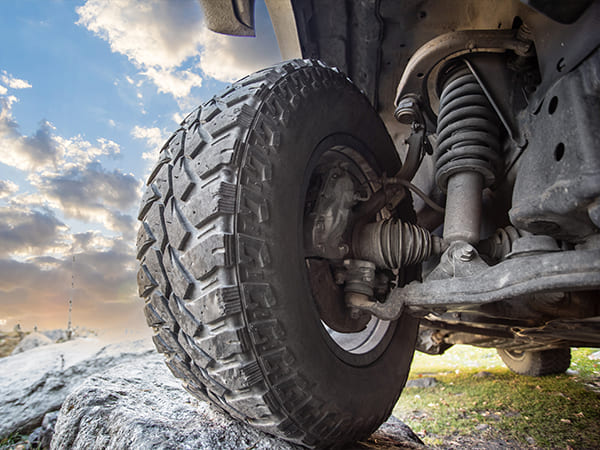
Off-road suspension systems experience accelerated wear due to extreme heat, dust, uneven terrain, and increased articulation. In Chandler, AZ, desert conditions and lifted setups place additional strain on shocks, control arms, bushings, and steering components. Proper inspection and timely repair prevent alignment issues, instability, and premature component failure.
Why Desert Off-Road Driving Changes Suspension Demands
Suspension systems built for pavement operate differently once a vehicle regularly sees dirt, rock, and washboard terrain. Off-road travel increases suspension travel, multiplies impact force, and stresses joints beyond normal commuting loads.
When you’re driving in Chandler, the scorching summer heat, all that desert dust, and hitting those off-road trails constantly really puts your suspension through the wringer. Throw on some bigger tires or a lift kit, and you’re adding even more stress to the mix. It’s not like off-road damage happens instantly. It slowly builds up over time, and then you start noticing your vehicle just doesn’t handle like it used to.
How Off-Road Suspension Systems Handle Extreme Movement
Off-road setups are designed for flexibility and impact absorption. Most include upgraded shocks, reinforced control arms, extended travel components, and modified geometry from lift kits.
These systems must absorb vertical force while maintaining steering control and alignment accuracy. If any pivot point develops excess play, the entire suspension system begins to lose precision. Proper geometry is everything. Even minor looseness affects tire wear and highway stability.
Common Suspension Failures We See in Chandler Off-Road Vehicles
Off-road suspension systems fail differently than standard street setups. Driving an off-road vehicle in Chandler is tough on your suspension. The scorching heat, fine desert dust, and constant pounding from rough terrain really speed up the wear and tear on crucial parts like pivot points and shock absorbers. Usually, problems start subtly, but before you know it, you’ll start noticing things like your steering feeling shaky or your tires wearing out on one side more than the other.
Heat-Damaged Bushings
Sustained triple-digit temperatures harden rubber bushings. Once elasticity is lost, vibration increases and alignment shifts under load.
Shock Fade and Seal Failure
Repeated washboard driving overheats shock fluid. Over time, seals weaken, damping performance drops, and leaks develop.
Dust-Accelerated Ball Joint Wear
Fine desert sand penetrates protective boots. Once lubrication escapes, wear progresses rapidly.
Control Arm Stress or Deformation
Rock impacts and uneven terrain can slightly bend suspension arms. Even minor distortion changes camber and caster angles.
Lift-Related Geometry Strain
Lift kits alter suspension angles. Without correction components, steering wander and premature wear often follow.
We routinely see lifted trucks in Chandler requiring front-end repairs earlier than street-only vehicles.
What Drivers Notice vs. What’s Actually Wearing Out
Suspension problems rarely announce themselves clearly. Most drivers feel a change in steering or ride quality long before they know which component is responsible. The symptoms you experience are often only surface indicators of deeper wear developing within the suspension system.
If you drive an off-road vehicle, you might notice:
- Your steering feels loose on the highway.
- You hear a clunk when you go over bumps.
- Your tires are wearing out unevenly.
- You feel a shaky vibration in the steering wheel.
- The ride just doesn’t feel as controlled as it used to.
These symptoms often mean something more serious is happening underneath, usually:
- Worn-out ball joints that are too loose.
- Bushings that have started to break down.
- Shocks that aren’t performing well anymore.
- Your alignment is significantly out of whack.
Big off-road tires can absorb a lot of the subtle bumps you’d normally feel, so suspension issues might not become noticeable until the parts are already seriously worn out.
Preventive Inspection for Arizona Desert Use
Vehicles that regularly leave paved roads need more frequent suspension checks than daily commuters.
Preventive steps include:
- Inspecting suspension after trail use
- Checking for shock leaks
- Monitoring bushing cracking
- Verifying alignment after heavy off-road driving
- Retorquing suspension hardware periodically
In Chandler’s heat, inspection intervals should be shorter than national averages. Preventive maintenance keeps small wear from becoming major repairs.
Repair Impact: Safety, Cost, and Downtime
Catching those suspension issues early isn’t just about saving money—it keeps the repair simple. But if you put it off, things get complicated fast:
- Your tires wear out much quicker.
- Steering gets stressed and feels heavy.
- Your alignment goes wonky.
- You risk a major failure with a ball joint or control arm.
Especially for those of us who venture out into the remote desert areas around Chandler, a reliable suspension is a huge safety net. Breaking down off-road is a massive hassle compared to a city fix. If you wait until secondary damage starts spreading through multiple parts, you’re looking at seriously long downtime.
Local Driving Patterns That Accelerate Suspension Wear
Chandler’s driving environment adds unique stress factors:
- Desert recreation and trail use
- Lifted diesel trucks with added weight
- Construction-heavy roadways
- Extreme summer temperatures
- High-speed washboard terrain
We frequently see diesel trucks and modified vehicles requiring earlier suspension service due to weight and angle changes. Arizona may reduce rust, but it increases rubber and seal degradation.
Final Thoughts on Off-Road Suspension Reliability
Off-road vehicles in Chandler operate under demanding conditions. Heat, dust, terrain, and modifications accelerate suspension wear beyond normal street driving expectations. Routine inspection, correct installation practices, and timely repairs preserve steering precision, tire life, and overall vehicle stability—both on pavement and in the desert.
When a Structured Suspension Evaluation Is Appropriate
If your off-road rig is starting to feel a little loose, noisy, shaky, or if you’ve noticed your tires wearing unevenly, it’s time for a proper check-up to find out exactly what’s going on with your suspension.
Here at Copperhead Diesel Performance, we thoroughly inspect everything for Chandler drivers: how your shocks are performing, the steering parts, the way your suspension is set up (the geometry), and how components are wearing down. Catching suspension problems early is the best way to keep your handling predictable and ensure your parts last a long time.
Frequently Asked Questions
Do off-road vehicles require suspension service more often?
Yes. Increased articulation and terrain impact accelerate wear compared to pavement-only use.
How soon should suspension be checked after trail driving?
After any heavy off-road trip, a visual inspection is recommended.
Can lift kits shorten component lifespan?
Without proper geometry correction, yes. Increased angles create additional stress.
Are minor steering changes serious?
Small changes often signal developing wear. Early inspection prevents larger issues.
Does shock fade affect safety?
Reduced damping decreases vehicle control, especially at highway speeds.